Nuclear Humanities
Nuclear Humanities showcases interdisciplinary approaches to the problem of nuclear harm through a five-day workshop sponsored by Whitman College’s 2016 O’Donnell Endowed Chair in Global Studies.
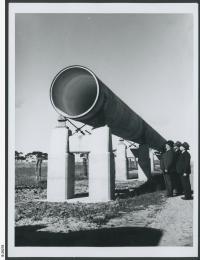

In this chapter of the virtual exhibition “Drought, Mud, Filth, and Flood: Water Crises in Australian Cities, 1880s–2010s,” the authors describe how the city of Adelaide has responded to periodic water shortages. Water security was sought first in reservoirs, then the Murray River, and more recently desalination. While earlier periods of shortage led to the development of the dual-flush toilet, the need for water conservation was only really cemented in the urban consciousness with the Millennium drought of 1996–2010.
In this chapter of the virtual exhibition “Drought, Mud, Filth, and Flood: Water Crises in Australian Cities, 1880s–2010s,” the authors show the extent to which the people of Perth, Western Australia, have relied on the groundwater of the Swan Coastal Plain, and the implications of this reliance in a drying climate. In the context of private and public extraction of groundwater, the government in 2014 commenced a groundwater replenishment scheme to “recharge” the local aquifers with treated wastewater.
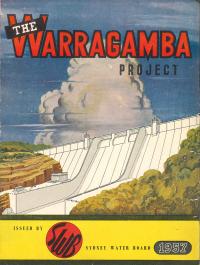
In this chapter of the virtual exhibition “Drought, Mud, Filth, and Flood: Water Crises in Australian Cities, 1880s–2010s,” the authors describe how the city of Sydney, New South Wales, has pursued the dual goals of plentiful water and cheap sanitation through the construction of the massive Warragamba Dam and ocean outfall sewers. Sewage polluting Sydney’s iconic beaches saw large protests in the 1980s and 1990s and closer monitoring of the ocean outfalls. Householders successfully curtailed their water consumption during the Millennium Drought, but as soon as dam levels rose again, water restrictions were abandoned because water retailers gain financially from higher consumption.
Libby Robin and Cameron Muir discuss representations of the Anthropocene in museums and events.
Libby Robin compares two major museum exhibitions on climate change that rely heavily on the IPCC models: Uppdrag Klimat (Mission: Climate Earth), at the Royal Natural History Museum in Stockholm (Naturhistoriska Riksmuseet), Sweden; and EcoLogic, at the Powerhouse Museum, Sydney.
Libby Robin discusses animals in museums, and how taxidermy has changed from art in the service of science to the backbone of art itself, both in museums and beyond.
Libby Robin discusses the implication of Sir Colin MacKenzie’s initiative to collect Australian marsupials.
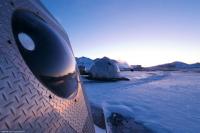
In this chapter from the virtual exhibition “Global Environments: A 360º Visual Journey,” Jeroen Oomen and Adam Sébire delve into the world of Carbon Capture and Storage (CCS) technologies through a video triptych in Hellisheiði in Iceland. The three screens, shown here in one video, capture experiments at Hellishei∂i, aspects of the sequestered CO2, and an imagined future.
This article examines transformations in the meaning and value of Voacanga africana.