

Arcadia
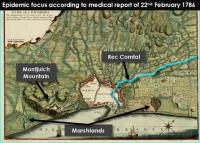
Marshlands, Sanitation Policies, and Epidemic Fevers in Late-Eighteenth-Century Barcelona (1783–1786)
A tertian fever epidemic occurred in Barcelona from 1783 to 1786 and affected approximately one million people.
A tertian fever epidemic occurred in Barcelona from 1783 to 1786 and affected approximately one million people.
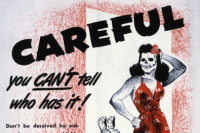
This paper explores how conceptions of Canada as a naturally healthy environment proved false when the ill-health of civilians was revealed during the First World War.
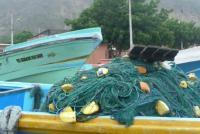
This article addresses the social implications of fishers leaving activities connected with small-scale fisheries, with an emphasis on food sovereignty.

In 2007/2008 a gendered ad campaign was used in Alberta, Canada, to encourage post-secondary students to undergo mumps vaccination. This ad campaign can be seen as the result of a confluence of factors unique to a campus environment.
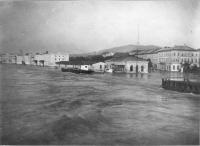
Cholera and typhoid fever did play a role in sanitary reform in Linz/Donau, but cannot be interpreted as the trigger of these reforms.

Pest control was a political act in late-nineteenth-century Hawaiʻi, helping sugarcane planters pursue annexation to the United States.

Aquatic dead zones result from pollution caused by excessive fertilizer runoff and wastewater discharge. Their number and extent are increasing.
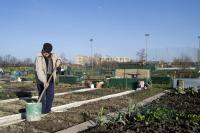
In 1980, Modena was the first city in Italy to introduce a law recognizing social urban allotments.
This article introduces this issue of Conservation and Society, and argues strongly for new place-based conservation through a multispecies lens.

In this 1995 annual report, the Fund for Wild Nature focuses on current anti-environmental politics and the skirting of environmental laws. The purpose of the fund, its funding guidelines, areas of support, and grant projects are laid out. Their intent is to foster connections among diverse groups with the underlying philosophy of Deep Ecology.