

Perspectives Article
Do Wastelands Exist? Perspectives on “Productive” Land Use in India’s Rural Energyscapes
Jennifer Baka looks at energy cultivation and energy security in India through an analysis of two energy development programs.
Jennifer Baka looks at energy cultivation and energy security in India through an analysis of two energy development programs.
In this article, Sarah Strauss and Carrick Eggleston track the transition to renewable energy in the village of Auroville in South India.

This article shows how rural collective action in tropical Australia transformed plantations into small farms in the late nineteenth century.
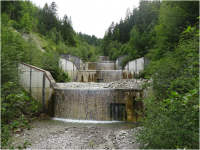
From channelizations to renaturations—the catastrophic flood of the Gürbe River in July 1990 prompted profound changes in approaches to flood protection.
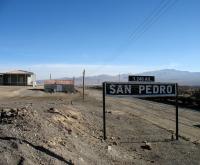
This essay explores the paradoxical relationship between extractive activities of the mining company Anaconda and indigenous villages of Atacama, Chile.
The authors draw on empirical experience to assess the extent of the impact of race and social equity in conservation, with the aim of promoting sustainable and more inclusive conservation practices in South Africa. Their findings suggest conservation practices in post-apartheid South Africa are still exclusionary for the majority black population.

Previously military fortifications, the barrier islands along the northern Gulf Coast of the United States today protect against climate change.
The authors explore the case of a Privately Protected Area (PPA) in Chilean Patagonia to learn its impact on local residents. Based on in-depth, semi-structured interviews, they find that the park has been detrimental to local livelihoods, has disrupted systems of production, and has elicited a negative emotional response.
This paper uses data from a long-term ethnography of both the local people and the conservation agenda in the Pantanal wetland, Brazil, to discuss how environmentalists used the National Policy for the Sustainable Development of Traditional Peoples and Communities (PNDSPCT) to justify the displacement of local people.
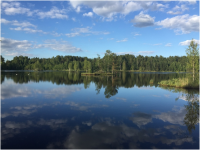
This article explores the social and ecological legacies of the peat industry in Russia and the different meanings that people attach to peatlands after the end of peat extraction.