


Multimedia | journal article
"Slamming the Anthropocene: Performing climate change in museums"
Libby Robin and Cameron Muir discuss representations of the Anthropocene in museums and events.
Libby Robin and Cameron Muir discuss representations of the Anthropocene in museums and events.
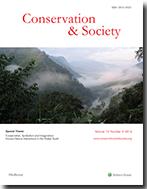
The author seeks to bring together environmental anthropology and history to frame the place of forests in humans’ lives, from a political ecology point of view. He does this by reflecting on his personal experiences in Northeast India, Kenya, and Sweden.
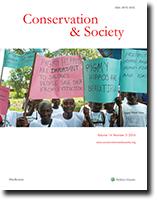
Ferran Pons Raga reviews Naturalezas en conflicto [Natures in Conflict] by José A. Cortés Vázquez.

The author analyzes the increase of human-wildlife conflict (HWC) in Mozambique’s Limpopo National Park due to conservation-induced displacement.
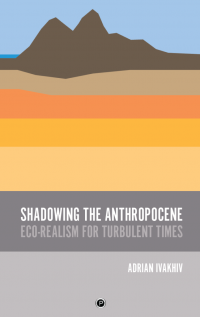
Adrian Ivakhiv proposes an ecological realism based on humanity’s eventual demise, asking what we can do now and what quality of compost we should leave behind.
The authors analyze perspectives of conservation professionals on the neoliberalization of ecosystem services, through a survey conducted with a group of conservationists based in Cambridge, England.
Drawing on interviews with the managers of 56 internationally adjoining protected areas in 18 countries in the Americas, the study focuses on the link between land use change and environmental change, and on three adaptation strategies, namely diversification, pooling, and out-migration. It suggests that the impact of adaptation depends on the adaptation strategy chosen.
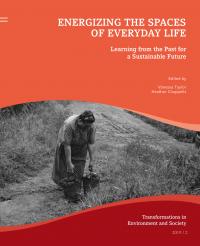
This volume of Perspectives offers case studies of energy transitions within everyday environments over the last two centuries, from Europe to South Asia, to North and Latin America.
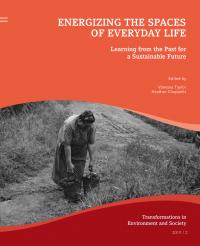
Ruth Sandwell examines people’s energy-related experiences in the transition from the organic to the mineral fuel regime in Canada.
Jennifer Carlson examines the material and social dimensions of contemporary energy transitions in the village of Dobbe in the East Frisian Peninsula.