Abandonment Issues: Producing Industrial Heritage Landscapes at the São Domingos Mine
This piece examines the historical context of industrial heritage tourism of the post-industrial landscape at the São Domingos Mine in southeastern Portugal.

This monograph explores the history of the use of human excrement as agricultural fertilizer in China.
In this chapter of her virtual exhibition “Human-Nature Relations in German Literature,” Sabine Wilke discusses texts that register transformations of landscapes or take a position on their causes. For the German-language version of this exhibition, click here.
In this chapter of her virtual exhibition “Human-Nature Relations in German Literature,” Sabine Wilke examines forests and deforestation in works by Adalbert Stifter, Marlen Haushofer, and Elfriede Jelinek. For the German-language version of this exhibition, click here.
Efforts to naturalize trout in German Southwest Africa capture German ambitions within its first and only settler colony.
The article focuses on the role of militants in compounding the problem of environmental degradation in the Niger Delta region in Nigeria.
At the 1873 Viennese World’s Fair, the botanist Friedrich Haberlandt became enchanted with the vision of integrating soyfoods into European diets as a cheap source of protein.
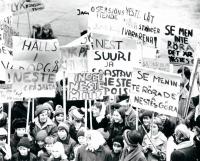
This article studies the “Neste war,” 1970–1972, the first major victory of the environmental movement in Finland.
Matthew MacLellan argues that Garrett Hardin’s primary object of critique in his influential “The Tragedy of the Commons” is not the commons or shared property at all—as is almost universally assumed by Hardin’s critics—but is rather Adam Smith’s theory of markets and its viability for protecting scarce resources.
Greear examines the contemporary trend toward de-industrialized and decentralized production and its implications for ecological sustainability. He suggests we can understand the potential positive ecological implications of such trends by reconceptualizing “incomplete information” in markets, which is often understood as a key way in which markets fail to solve or forestall environmental problems.