


Multimedia | film profile
Trash Dance
In Trash Dance, choreographer Allison Orr tries to persuade employees of the Austin Department of Solid Waste to participate in a public dance performance.
In Trash Dance, choreographer Allison Orr tries to persuade employees of the Austin Department of Solid Waste to participate in a public dance performance.

Powerless is a film about India’s energy poverty and the people’s desperate measures to create functioning infrastructure. Electricity “thieves” divert power to homes and small businesses and come head-to-head with electricity supply companies.
Postcolonial Ecologies: Literatures of the Environment is the first edited collection to bring ecocritical studies into a necessary dialogue with postcolonial studies.
Waste is never completely or permanently “out of sight.” Once discarded, it undergoes transformations, often reappearing elsewhere in new forms. In this volume of RCC Perspectives, scholars from different disciplines—from history and art history, urban geography, environmental studies, and anthropology—investigate the traces waste leaves behind in the course of its travels.
Urban mining—reclaiming valuable metals from discarded electronic devices—has become an important economic activity in the informal sector in places such as Agbogbloshie, a slum in Accra, Ghana. This article examines the material flows linking Ghana with the rest of the world, the politics of waste recycling, and the hazards faced by those processing e-waste.
Energy-from-waste plants in places like Britain were designed help reduce waste and carbon emissions, but they have had unintended side-effects.
In case studies ranging from the Early Modern secondhand trade to utopian visions of human-powered vehicles, the contributions gathered here explore the historical fortunes of bicycling and waste recycling—tracing their development over time and providing valuable context for the policy successes and failures of today.
This article examines the energy transition in the iron industry and studies the consequence of this switch to coal-fueling technology upon forests.
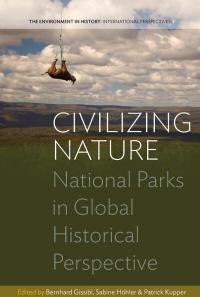
National parks are one of the most important and successful institutions in global environmentalism. Shifting the focus from the usual emphasis on national parks in the United States, Civilizing Nature adopts an historical and transnational perspective on the global geography of protected areas and its changes over time.
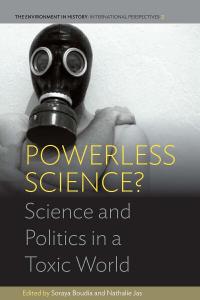
Powerless Science? looks at complex historical, social, and political dynamics, made up of public controversies, environmental and health crises, economic interests, and political responses, and demonstrates how and to what extent scientific knowledge about toxicants has been caught between scientific, economic, and political imperatives.