


Multimedia | journal
Earth First! 26, no. 1
Earth First! 26, no. 1 features reports about climate change and climate justice, looks into the future of civilization, and fights for the rights of animals.
Earth First! 26, no. 1 features reports about climate change and climate justice, looks into the future of civilization, and fights for the rights of animals.

Earth First! 25, no. 6 is devoted to campaigns and activists in Canada, the United States and Palestine who deal with river, mountain and forest conservation, and fight for animal rights and against pollution and apartheid.

In Earth First! 25, no. 5 Turtle problematizes seal hunt in Canada, Sam and Sprocket refer to the dangers of cellphone communication, and Ron Huber explores the history of Earth First! treehuggers.
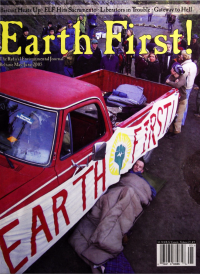
Earth First! 25, no. 4 reports on the protests against logging in the wild Siskyou Mountains in Oregon, on jurisdictional consequences for Earth Liberation Front activists, and features an essay on “Stupidity and Critics of the Ecology Movement.”

Earth First! 25, no. 3 features a call on action for ocean species going extinct, such as the Leatherback turtle, presents the Sea Shepherd Conservation Society’s first mate, and focuses with biotechnology.

Earth First! 25, no. 2 features articles on anti-nuclear activists on both sides of the Atlantic and the liberation of over 400 animals in Iowa, and features a special Earth First! primer in English and Spanish.

Earth First! 25, no. 1 features articles on dam fights in California, southern Mexico, and Paraguay, presents an interview with activist Allison Lance Watson, and targets nanotech.
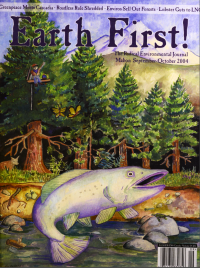
In Earth First! 24, no. 6 Tim Ream describes the friction between Greenpeace hirarchy and local forest defender consensus in Oregon, Jessica Lee reflects on the Recreation fee demonstration Program (fee demo), and Rod Coronado and Chuk’Shon EF! struggle to protect the prairie dog and save the wild ferret.
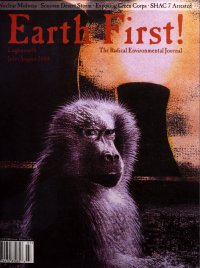
In Earth First! 24, no. 5 Abigail reflects on the nuclear policy of the Bush administration, Lenny determines that “institutions of higher learning are coming to resemble police and surveillance states,” and Pippi the Rat describes how leaders of African nations reject GM food aid.

In Earth First! 24, no. 4 Chuk’Shon EF! reports on the sabotage of a mountain lions hunt in the Sonoran Desert, Abigail is pleased about Bayer’s withdrawal from growing GE maize in Britain, and Kim Antieu reflects on the annual pesticide spraying by US county and state departments, farmers and homeowners.