


Multimedia | journal
Wild Earth 1, no. 3
Wild Earth 1, no. 3 with essays on hydro development in North America, trans-boundary ecosystem preservation, the central Appalachian wilderness, and the need for deep ecological language.
Wild Earth 1, no. 3 with essays on hydro development in North America, trans-boundary ecosystem preservation, the central Appalachian wilderness, and the need for deep ecological language.
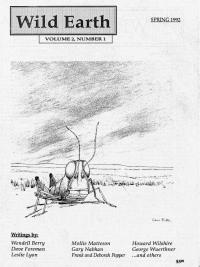
Wild Earth 2, no. 1 with essays on the ecological costs of livestock, bison hunt, trouts and their habitat, “wheeled locusts,” and off-road-vehicle trails on public lands.
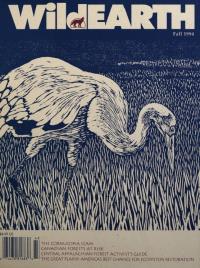
Wild Earth 4, no. 3 features Canadian forests at risk, an activist’s guide to Central Appalachian forests, citizen involvement in mining issues, a proposal for a Thoreau Regional Wilderness in northern Maine.
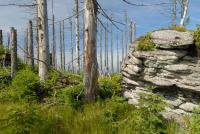
The Bavarian Forest National Park, situated in South-Eastern Germany along the boundary with the Czech Republic, was established as the country’s first national park in October 1970.

This paper explores the context of environmental justice (EJ) in Scotland, and presents a case study whereby the main attributes for an indicator of EJ were identified, encompassing procedural and distributive aspects of justice.
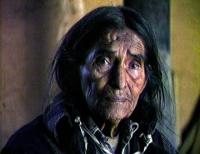
Celebrating the Hopi Tricentennial, Itam Hakim Hopiit is a poetic visualization of Hopi philosophy and prophesy.
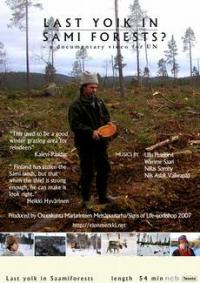
The Last Yoik in Saami Forests? chronicles the logging damage that has taken place in the forests of Finnish Lapland over the past 50 years.
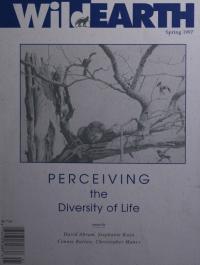
In Wild Earth 7, no. 1 David Abram rediscovers our animal senses, Stephanie Kaza analyzes assumptions and stereotypes about human-nature relations, Connie Barlow reflects on the epic of evolution, and Christopher Manes reflects on a meaningful relationship with the wild.
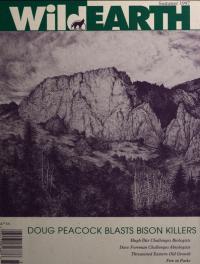
In Wild Earth 7, no. 2 Doug Peacock presents his field report on the Yellowstone bison slaughter, Reed Noss writes about endangered major ecosystems of the United States, and Virginia Abernethy analyzes if and how population growth discourages environmentally sound behavior.
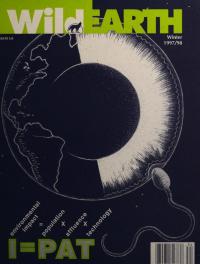
Wild Earth 7, no. 4 features provocative essays on population extinction and the biodiversity crisis, how immigration threatens America’s natural environment, the costs of affluence and consumption, and a technological imperative.