


Arcadia
Castlemaine: Climate Change, Consciousness, and Art
This area attracted an exodus of youthful creative urban dwellers resettling the land with aims of self-sufficiency and communal living.
This area attracted an exodus of youthful creative urban dwellers resettling the land with aims of self-sufficiency and communal living.
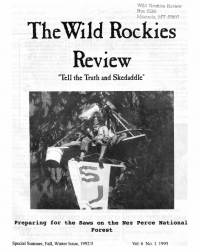
In this special “rant issue,” Rhubarb discusses the idea of industrial collapse, Phil Knight tells of a lone hiker killed by grizzlies, and Jeff Juel reports on planned drilling in the Hall Creek area of the Badger-Two Medicine, home to the grizzly bear, the grey wolf, bald eagle, and other endangered species.
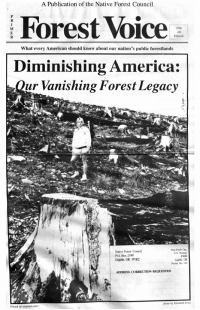
A 1996 primer by the Native Forest Council introduces the dire situation of America’s national forests, its origins, and explains why it continues. It introduces the National Forest Protection Acts draft legislation and suggests concrete ideas for what citizens and activists can do to stem deforestation.
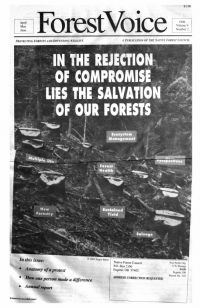
This issue of Forest Voice, a publication of the Native Forest Council, provides an annual report, outlines its goals, and highlights its successes in advancing a Zero-Cut policy on public lands, even resulting in support from a majority of Sierra Club members. Bill Willers address timber industry influence on U.S. public schools. A feature article spotlights a referendum to limit clearcutting in Maine.

The article focuses on the role of militants in compounding the problem of environmental degradation in the Niger Delta region in Nigeria.

These EXIT Times is the authoritative voice of the Voluntary Human Extinction Movement (VHEMT, pronounced “vehement”). The VHEMT slogan is “May we live long and die out.”
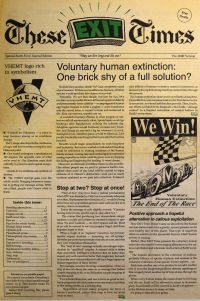
These EXIT Times is the “vehement voice” of the Voluntary Human Extinction Movement (VHEMT, pronounced “vehement”). The VHEMT slogan is “May we live long and die out.” This issue is a special “pre-2000” Earth First Journal edition.
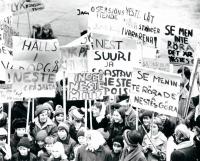
This article studies the “Neste war,” 1970–1972, the first major victory of the environmental movement in Finland.

In this Special Commentary Section titled “Replies to An Ecomodernist Manifesto,” edited by Eileen Crist and Thom Van Dooren, Bruno Latour explores the political import of the notion of “ecomodernism.”
In this Special Commentary Section titled “Replies to An Ecomodernist Manifesto,” edited by Eileen Crist and Thom Van Dooren, Rosemary-Claire Collard, Jessica Dempsey, and Juanita Sundberg critique the manifesto as fostering amnesia: amnesia about the uneven and violent nature of modernization as well as about the struggles that have underpinned efforts to alleviate inequality and violence.