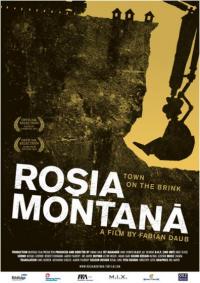
Roșia Montană
This film follows the inhabitants of an ancient Carpathian village as they resist its destruction by a Romanian-Canadian corporation, which plans to turn it into Europe’s largest mine for gold and silver.
This film follows a court case between Canadian mining companies and author Alain Deneault following his critique of industry practices.
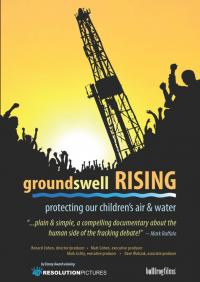
This film shows how the oil and gas industries, rich with political connections, obtained a position of almost untouchable power and how at-risk communities have united to fight back.
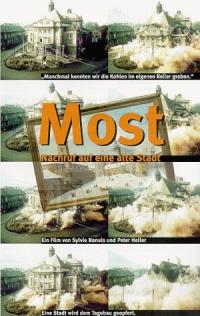
The film tells the story of the town Most in Northern Bohemia, destroyed in the quest for coal.
Vaclav Smil shows why energy transitions are inherently complex and prolonged affairs, and how ignoring this raises unrealistic expectations that the United States and other global economies can be weaned quickly from a primary dependency on fossil fuels.
Fei Sheng analyzes the ecological factors in China that spurred migration to Australia at a time when the discovery of gold as a natural resource made the country an ideal migration destination. He shows how Chinese migrants applied their environmental experience in a white settler colony.
This essay reflects on an incident in 1995, when 300 snow geese died in the flooded Berkeley Pit, a toxic open pit copper mine in the northwestern United States. In his analysis the author draws on new materialist theoretical approaches that reject anthropocentric thinking and instead emphasize the powerful materiality of cultural phenomena.
Longley traces how geographic and cartographic knowledge of the Athabasca region, Alberta, Canada, colonized the region in the southern imagination long before the oil sands industry began extraction there. The practices of exploration, surveying, and documentation mapped the Athabasca region in terms of its rich bitumen deposits, obscuring the histories of Indigenous people. The south gained political and economic control of the region, although this process is incomplete and contested.
This article is an exploration of the chemical heritage of mining activities in northern Chile.
In this chapter of the virtual exhibition “Energy Transitions,” historian Nuno Luís Madureira argues that the study of such transitions itself has gone through changes over the course of history.