

Arcadia
A Shaggy-Bear Story: An Environmental History from a Remote Region
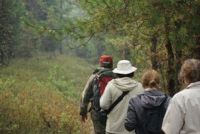
This article looks afresh at the environmental history of Russia by starting from the perspective of some bears in Siberia.
This article looks afresh at the environmental history of Russia by starting from the perspective of some bears in Siberia.
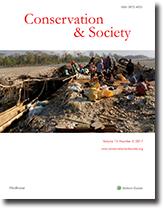
Crystal A. Crown and Kalli F. Doubleday explore media representation of Human-Leopard Interactions (HLI) in India, focusing on detecting agenda-setting and framing in articles, and whether these differ with the level of association with HLI. They conclude that the largely negative depiction, and differences in representation between geographic locations, could hinder mitigation strategies and policy by presenting stakeholders with incomplete information.
Monika Krause and Katherine Robinson follow up on the observation that charismatic species attract a disproportionate amount of attention and resources in international conservation by investigating how cultural schemas and organizational routines shape resource allocation in conservation more broadly.
Catrina A. MacKenzie, Rebecca K. Fuda, Sadie Jane Ryan, and Joel Hartter use interviews and focus group discussions to assess the interaction of oil exploration with the three primary conservation policies employed by the Uganda Wildlife Authority: protectionism, neoliberal capital accumulation, and community-based conservation.
Sorrel Jones, Malcolm D. Burgess, Frazer Sinclair, Jeremy Lindsell and Juliet Vickery present new data on rule-breaking prevalence in Gola Rainforest National Park, Sierra Leone, and use these data in spatially explicit simulations to assess the survey effort and design required to detect change and assess the effect of rule-breaker behavior to these designs.
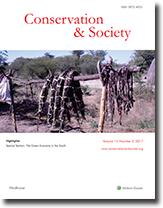
In this Special Section on the Green Economy in the South, V. Corey Wright contributes to the debate about Tanzania’s Wildlife Management Areas (WMAs) and the nature of decentralization. He argues that WMAs represent risk but also an opportunity for rural communities.
Susana Costa, Catarina Casanova, and Phyllis Lee present a study of the obstacles to women’s participation in conservation strategies associated with Cantanhez Forest National Park (CFNP), in Guinea-Bissau, West Africa. The findings revealed that the women felt the Park was responsible for malnutrition in the communities due to damage of crops by wildlife.
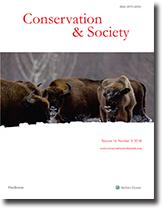
In this article, Monica Vasile discusses the recent reintroduction of bison in the Romanian Carpathians, and the surrounding local narratives and unresolved tensions.
McKenzie F. Johnson, Krithi K. Karanth, and Erika Weinthal evaluate compensation as a mitigation policy for human-wildlife conflict around four protected areas in Rajasthan (Jaisamand, Sitamata, Phulwari, and Kumbhalgarh), finding efforts insensitive to local livelihoods.
Etienne Sabatier and Charlie Huveneers examine media portrayals of human-shark encounters between 2011 and 2013 in the state of Western Australia, arguing that negative framing by media feeds public anxiety.