

Multimedia | journal article
“Flood Mitigation, Climate Change Adaptation and Technological Lock-In in Assam”
This article looks at climate change adaption and flood mitigation.
This article looks at climate change adaption and flood mitigation.
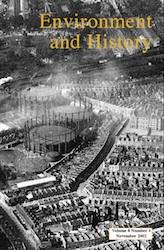
This paper attempts to demonstrate the nature of human impact on forest cover and flooding in the Annecy Petit Lac Catchment in pre-Alpine Haute Savoie, France, between 1730 and 2000.

Research on climatic variations in the sixteenth century has stressed the exceptionality of extreme events, but the case of the lower Po basin, where lack of instrumental data renders the concept of exceptionality complex and relative, shows that this is not necessarily valid.
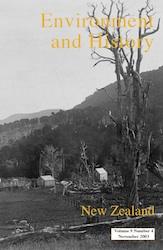
The history of environmental anxiety in nineteenth- and twentieth-century New Zealand can be traced by focusing on problems caused by deforestation.
The paper addresses various ways that water is constructed as “dangerous,” whether because there is too much (floods), too little (droughts), or because it is polluted. Mauch emphasizes that although water catastrophes have a natural origin, their effects are primarily social.
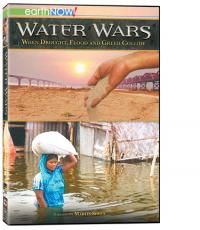
This film examines attempts by communities and experts around the world to protect their water resources in the face of global warming, pollution, and political conflict.
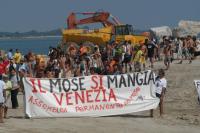
In the early 2000s, a coalition of citizen-activists in Venice denounced the state’s massive flood-barrier project, raising public participation in the fate of the lagoon.

Novelist Catherine Bush walks the streets of Venice, seeking art that engages with Rachel Carson at the Biennale Arte 2024.
This project looks at the historical intersections between environmental change and migration, and is particularly interested in climate-induced movements of people in the past.
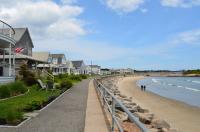
An east-coast beachfront neighborhood faces a difficult decision about how to respond to storms and rising seas.