


Multimedia | interviews and talks
“Science, Society, Signs”
Lunchtime Colloquium at the Rachel Carson Center with Harald Lesch.
Lunchtime Colloquium at the Rachel Carson Center with Harald Lesch.

This article reconsiders the relevance of Peter Kropotkin’s notion of mutual aid in evolution, which holds that cooperation is a more decisive factor than competition both among human and nonhuman animals.

In this episode from the New Books Network podcast, Ailton Krenak is interviewed on his recent book, Life Is Not Useful.
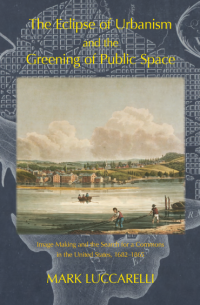
In this book, environmental philosopher Eric Katz explores technology’s role in dominating both nature and humanity.

Explore the Moon, the world, and the self in a lyrical essay with author Christopher Cokinos.

A reflection on the historical approach to synthesis as a part of the toolbox of environmental history, with a focus on Lewis Mumford.

In this essay, Basarab Nicolescu explores diverse concepts and perspectives for addressing real-world problems.

Is technology neutral, or is it the architect of our alienation? In this March 2005 lecture, anarcho-primitivist philosopher John Zerzan argued that civilization itself—defined by domestication, division of labor, and industrial technology—is the root cause of modernity’s ecological and psychological dysfunctions.

Miyaoi Yasuo’s 1858 collection of tales, Kidan zasshi, challenges assumed human–animal boundaries, portraying shared ethics, reincarnation, and emotional connections by blending folklore and insights drawn from Edo-period experience.
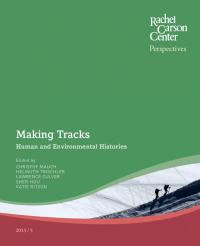
Shen Hou reflects on the influence of Donald Worster’s Dust Bowl: The Southern Plains in the 1930s on his understanding of environmental history.