


Perspectives Article
Can Environmental Humanities Help Make a Better World?
In this piece, Paul Holm reflects on the relevance of environmental-humanities research in addressing contemporary environmental challenges.
In this piece, Paul Holm reflects on the relevance of environmental-humanities research in addressing contemporary environmental challenges.
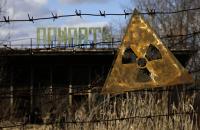
Ecological Sites of Memory is a RCC project that seeks to look into the historical memories that resonate in our environmental thinking.

An essay by Bron Taylor on Dave Foreman first published in the edited volume Wildeor: The Wild Life and Living Legacy of Dave Foreman (Essex Editions, 2023).

Earth First! Journal 32, no. 2 features essays on “Colonial Louisiana in the 20th Century,” digital eco-defense, greenwashing, and solidarity in a biocentric movement.
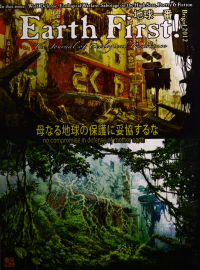
Earth First! Journal 32, no. 1 features issues concerning monkeywrenching, “Colonialism, Biofuels and Land Rights in Central America,” ecological warfare, and the merging of deep green resistance and the occupy movement.
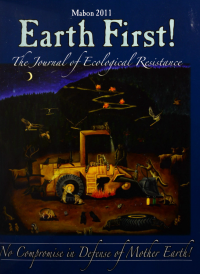
Earth First! Journal 31, no. 4 features “An EF!ers Guide to Citizen Monitoring of Water Pollution Discharge Permits,” as well as essays on GPS tracking, border policy, and “Canopy Occupation Against Coal.”
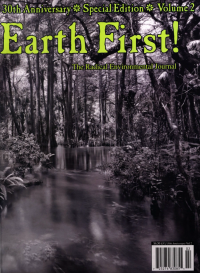
The second volume of the 30th anniversary edition of Earth First! features the topics of industrial agriculture, history and resistance to MTE in Appalachia, direct action for Orangutans in Borneo, and native perspectives on ecology.
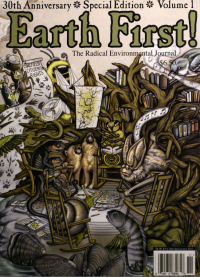
The 30th anniversary edition of Earth First! presents essays on “Deep Green Resistance,” “The Animal Enterprise Terrorism Act and the Assault on Academic Freedom,” and “Connecting Biological and Linguistic Diversity Crises.”
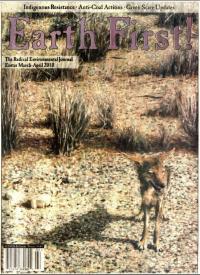
Earth First! 30, no. 3 reports on Dakota people occupying land, disaster capitalism in Haiti, how insurrectionist Mexico celebrates Black Christmas, forest occupation in Catalonia, and the Navaho-Hopi relocation.
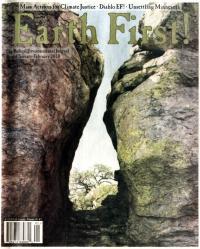
Earth First! 30, no. 2 reports on the Copenhagen climate conference in December, the endangered American grey wolf, how industrial windpower threatens Maine’s mountains, and nuclear renaissance and the necessary resistance.