

Arcadia
A Milestone on the Road to Independence? Singapore’s Catastrophic 1954 Floods
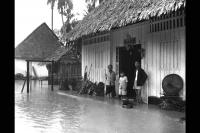
The flooding in Singapore in 1954 was one of the most significant floods on the island in the twentieth century.
The flooding in Singapore in 1954 was one of the most significant floods on the island in the twentieth century.

Susie Hatmaker investigates the largest flood of coal ash in United States history in 2008 as an event at once monumental and insignificant.

Historical documents indicate that the disasters caused by mining in Brazil are a reality since the eighteenth century.
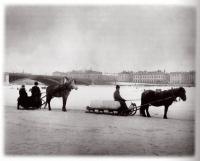
Since its foundation in 1703, the history of St. Petersburg is closely linked to the Neva River. The Neva is the biggest and the most important river in the Eastern Baltic. The citizens of St. Petersburg constructed complex technologies of river control that enabled them to live cheek by jowl with the mighty and self-willed stream.

The first cholera epidemic in St. Petersburg, then capital of the Russian Empire, brought to light the city’s enormous sanitary problems. During the course of the epidemic 12,540 people sickened and 6,449 died.
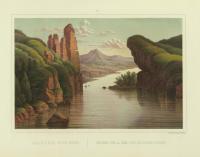
In 1947, inhabitants of Yakutsk gained access to potable groundwater from below the permafrost layer for the first time.
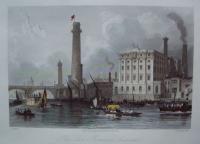
Making more beer for eighteenth-century London’s growing population increased the need for clean water. Efforts to guarantee supplies to the brewers had an effect on both urban and rural landscapes.
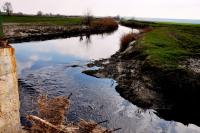
This article investigates the pollution of the Ergene River as an outcome of the hegemonic cosmology in Turkey.

This essay reflects on an incident in 1995, when 300 snow geese died in the flooded Berkeley Pit, a toxic open pit copper mine in the northwestern United States. In his analysis the author draws on new materialist theoretical approaches that reject anthropocentric thinking and instead emphasize the powerful materiality of cultural phenomena.

This film follows two friends as they travel the full length of the sacred Ganges River in India.