


Multimedia | journal article
“The Slow Death of an Ethiopian Lake”
In this article, environmentalist Hayal Desta considers the impact of agrarian practices and climate change on Lake Ziway, Ethiopia.
In this article, environmentalist Hayal Desta considers the impact of agrarian practices and climate change on Lake Ziway, Ethiopia.

This article addresses the deep history of pest crops and plant diseases in historical agriculture development.
Anthropologist and STS scholar Mascha Gugganig and cultural geographer Judith Bopp discuss “Organic Farming in Thailand” and prevailing narratives about agriculture.
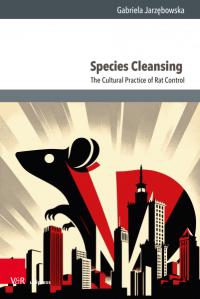
Excerpt from Species Cleansing: The Cultural Practice of Rat Control by Gabriela Jarzębowska.

The story of Rachel Carson’s Silent Spring told in Spanish.
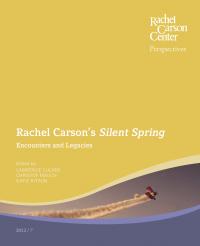
This issue of RCC Perspectives takes a sweeping look at encounters with and legacies of the book, examining the global impact of Silent Spring over its half century of existence and considering the ways in which Rachel Carson’s ecological worldview equips us to understand and confront current and future challenges to our planet.
Jenny Price critiques Rachel Carson’s Silent Spring for reinforcing a human–nature divide that shifted environmental responsibility onto individuals while obscuring systemic and institutional accountability.
Joan Maloof contrasts her father’s defense of DDT with her embrace of Rachel Carson’s message in Silent Spring, highlighting the personal and generational tensions surrounding pesticide use and environmental responsibility.
Christof Mauch highlights the global and enduring influence of Rachel Carson’s Silent Spring, emphasizing her prophetic style and lasting impact on worldwide environmental thought and action.
Akrish Adhikari argues that Rachel Carson’s Silent Spring sparked a lasting global environmental movement, continuing to inspire organizations like the World Wide Fund for Nature (WWF) and shape modern ecological advocacy.