


Perspectives
The Good Muck: Toward an Excremental History of China
This monograph explores the history of the use of human excrement as agricultural fertilizer in China.
This monograph explores the history of the use of human excrement as agricultural fertilizer in China.
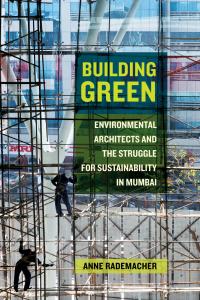
This book explores the experience of environmental architects in Mumbai, one of the world’s most populous and population-dense urban areas and a city iconic for its massive informal settlements, extreme wealth asymmetries, and ecological stresses.
Giovanni Bettini on migration and climate change. This is an entry in the KTH EHL VideoDictionary.
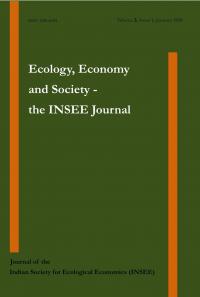
In this commentary, Simon A. Levin argues for the partnership between ecologists and economists.

In this Springs article, professor Helen Tiffin considers the role of human overpopulation in the environmental crisis.

In this issue of Earth First! Journal Leslie Hemstreet and Jim Flynn discuss why many former EF! activists walked away from the name Earth First!, Karyn Strickler writes on environmental politics and the Endangered Species Act (ESA), and Kelpie Wilson discusses overpopulation in the twentieth century.

In this issue of Earth First! Journal Karen Pickett reports about the actions against building on Mount Graham. In addition, Kelpie Wilson discusses overpopulation and politics, “Terra Prima! Victoria” calls for attention to the destruction of native lands in Brazil, and Vistara Parham problematizes the concept of grazing.
In this issue of Earth First! Journal Bill Hipwell gives an update on the monkeywrenching actions against helicopters to save wolves in Yukon Territory, northern Canada; Danielle Droitsch argues that Champion International’s Canton (North Carolina paper mill) poisons the Pigeon River; George Wuerthner discusses biodiversity and snails; and Elaine Lissner discusses non-hormonal male contraception.

In this issue of Earth First! “Slugthang” reports on the effort against the extinction of salmon on the Columbia River. In addition, Erik Ryberg discusses civil disobedience, Leslie Lyon stresses the lessons drawn from the Utah Wilderness Battle, and Christi Stevens analyzes the effects of human overpopulation.
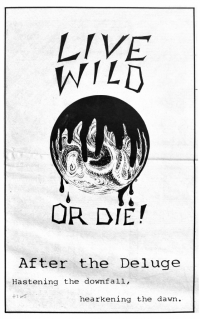
In Live Wild or Die! no. 2 C. J. Hinke takes an extreme stand for saving trees; Dumpsterman, son of Waste King, describes the logic of dumpster diving; Vic Vac Sectomy and Tutti Toob Tyed argue for reproductive choice; and an unknown TV smasher offers tips on how to destroy televisions with steel pipes wrapped in duct tape.