

Arcadia
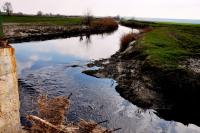
Cosmology of the Ergene River Pollution
This article investigates the pollution of the Ergene River as an outcome of the hegemonic cosmology in Turkey.
This article investigates the pollution of the Ergene River as an outcome of the hegemonic cosmology in Turkey.
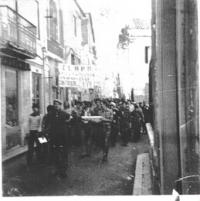
This article examines mobilization and resistance against pollution in the Alviela River in the Santarém municipality, Portugal, since the 1950s.

In 1966, a stray beluga whale swimming up and down the polluted Lower Rhine caught the media’s attention in West Germany.
In this article Disco describes the repertoires developed by the municipal waterworks of two large Dutch cities, Amsterdam and Rotterdam. Two main repertoires are visible: 1) ‘coping’ by means of technical fixes and vigilance and 2) ‘transnational technopolitics’ aimed at institutionalising regulatory regimes to curb pollution.
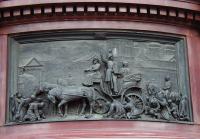
The 1831 cholera riot in St. Petersburg was an extreme result of the city’s immense water pollution problem and led to social conflict between the educated classes and the poor people.
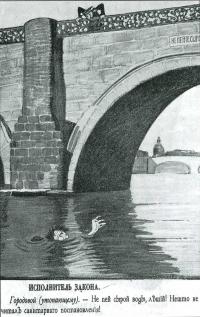
In this chapter of their virtual exhibition “‘Commanding, Sovereign Stream’: The Neva and the Viennese Danube in the History of Imperial Metropolitan Centers,” the authors discuss similarities and differences in the history of water supply, pollution, and waste management in St. Petersburg and Vienna.
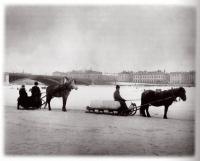
Since its foundation in 1703, the history of St. Petersburg is closely linked to the Neva River. The Neva is the biggest and the most important river in the Eastern Baltic. The citizens of St. Petersburg constructed complex technologies of river control that enabled them to live cheek by jowl with the mighty and self-willed stream.
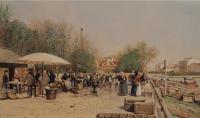
This exhibition shows some of the many links between the Neva River in St. Petersburg and the Viennese Danube discovered during the joint Russian-Austrian research project “The Long-Term Dynamics of Fish Populations and Ecosystems of European Rivers.”
Franz-Josef Brüggemeier explores the environmental history of Germany’s Ruhr region, focusing on industrial pollution and ecological restoration.
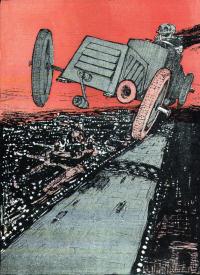
The first cholera epidemic in St. Petersburg, then capital of the Russian Empire, brought to light the city’s enormous sanitary problems. During the course of the epidemic 12,540 people sickened and 6,449 died.