

Multimedia | image
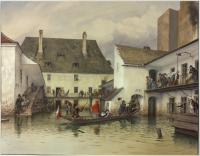
Painting: Rescue during the 1847 Vienna flood
This painting by Leander Russ depicts a rescue operation during a flood in Vienna in 1847.
This painting by Leander Russ depicts a rescue operation during a flood in Vienna in 1847.

Brisbane’s 1893 floods shaped water policy in southeast Queensland, creating a dependency on dams.

In 1975, construction began for the Thames Barrier, a moveable flood defense located on the River Thames, downstream of central London in the United Kingdom.

The St. Petersburg flood of 1824, in which the level of the river Neva rose to the 4 meter 20 centimeter mark, is the greatest in the history of the city. The city did not recover from the destructive effects of the flood until the mid-1830s.

The 2019 flooding of Townsville in northern Australia proved that Queensland’s dry tropical environment is a temperamental master.

Brisbane’s 1974 floods substantially damaged Brisbane, accelerating the government’s plans for a second flood mitigation dam.
Fedor Yakovlevich Alekseev’s painting of Karuselnaya square (now Teatralnaya square) during the 1824 flood.
During the eighteenth and nineteenth centuries, massive floods regularly threatened cities and settlements along the Danube River. The introduction of wide-reaching telegraph networks enabled Habsburg authorities in Vienna to protect the most important city of the empire.
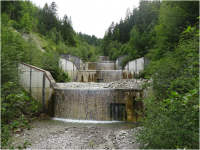
From channelizations to renaturations—the catastrophic flood of the Gürbe River in July 1990 prompted profound changes in approaches to flood protection.

The main hypothesis is that the metaphorical discourse about the disaster and nature in general serves as a metaphorical reservoir for illustrating and legitimising the abstract political process of the German Reunification.