

Multimedia | journal
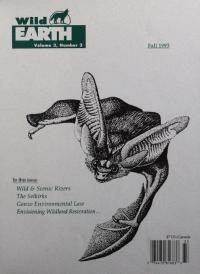
Wild Earth 3, no. 3
Wild Earth 3, no. 3 features articles on protecting biodiversity in the Selkirk Mountains, preserving biodiversity in caves, restoring the Wild Atlantic Salmon, and changing state forestry laws.
Wild Earth 3, no. 3 features articles on protecting biodiversity in the Selkirk Mountains, preserving biodiversity in caves, restoring the Wild Atlantic Salmon, and changing state forestry laws.
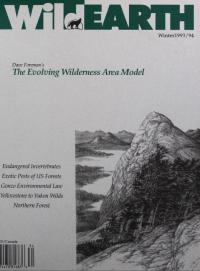
Wild Earth 3, no. 4 puts the spotlight on endangered invertebrates, exotic pests in US forests, the Northern Rockies Ecosystem Protection Act, and keywords of conservation and environmental discourses.
Under the direction of David Brower, the Sierra Club issued photographic books, cards, and calendars featuring charismatic images of nature in a state of pristine grandeur or untrammeled intimacy to expand its membership and promote its environmentalism.
An advertising campaign by Vickers and Benson helped the Canadian environmental organization Pollution Probe brand itself during the early years of its existence.
The photo exhibition “Our Only World,” opened at the Smithsonian Institution in 1974, is conceivably the first example of a photo exhibition in which a national government consciously employed photographic eco-images to emphasize the complexity of environmentalism and to sanction specific behavioral patterns.
This essay will focus on the use of eco-images in unconventional visual environmental campaigns.
Museum exhibitions offer a unique space for creating a three-dimensional experience of the systemic interconnectedness that characterizes the Anthropocene, as well as encouraging reflection and participatory discussion. The Deutsches Museum has decided to tackle the challenges of this new age head-on and become the first museum to create a major exhibition on the Anthropocene. While curating an exhibition, we also tackle the question of how to “curate” the planet in its literal sense of taking care of it and curing it.

This article looks at how environmental life histories have been used for particular purposes.
Callicott supposes that the environmental turn in the humanities, grounded in ecology and evolutionary biology, foreshadows an emerging NeoPresocratic revival in twenty-first century philosophy.

This is a chapter of the virtual exhibition “Welcome to the Anthropocene: The Earth in Our Hands”—written and curated by historian Nina Möllers.