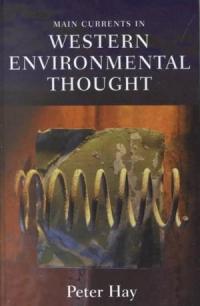
Main Currents in Western Environmental Thought
Main Currents in Western Environmental Thought provides an inclusive and balanced survey of the major issues debated by Western environmentalists over the last three decades.
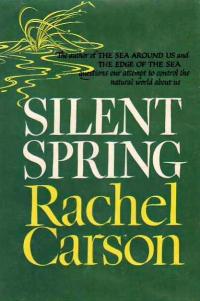
Silent Spring describes the harmful effects of pesticides on the environment, and is widely credited with helping launch the environmental movement.
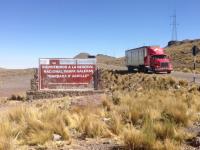
In the 1980s, Bárbara d’Achille traveled through Peru as one of the country’s first environmental writers and activists.
Within a vegetarian ecofeminist framework, Pilgrim analyses three popular nonfiction books that construct narratives around the story of meat.
This article argues that in contemporary Wayanad in Kerala, southern India, human-animal relations are embedded in a history of ecological modernity composed of three modes of encounter between agrarian change (capitalist settler agriculture) and forest conservation (state-led and globalizing). It suggests that the notions of “frontier,” “fortress,” and (precarious) “conviviality” best capture the historical and emerging environmental relations in this environment of crisis.
Olwig asserts that the discipline we now know as environmental history owes a great deal of its impetus to the emergence at the beginning of the nineteenth century of a socially engaged and environmentally committed interdisciplinary ‘proto-discipline.’
In the “Living Lexicon for the Environmental Section” of Environmental Humanities, Maan Barua reveals encounters as spatializing and “ecologizing” politics in ways that are vital for the environmental humanities’ efforts to redistribute powers to act and to flourish.
This essay considers medieval long distance trades in grain, cattle, and preserved fish as antecedents to today’s globalised movements of foodstuffs.
In April 1979, the European Communities (EC) adopted the Council Directive on the Conservation of Wild Birds (79/409/EEC), the so-called “Birds Directive.”
Emily O’Gorman examines the ways in which ducks as well as people negotiated the changing water landscapes of the Murrumbidgee River caused by the creation of rice paddies.