The Galápagos Islands: A Natural Laboratory?
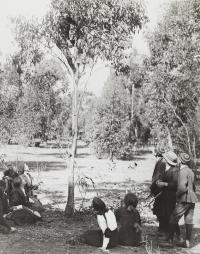
Is it possible to conserve the Galápagos Islands as a “natural laboratory” in the Anthropocene?
In this article, Monica Vasile discusses the recent reintroduction of bison in the Romanian Carpathians, and the surrounding local narratives and unresolved tensions.
In episode 49 of Nature’s Past, a podcast on Canadian environmental history, Sean Kheraj speaks with Darcy Ingram about Ingram’s 2014 book Wildlife Conservation and Conflict in Quebec, 1840-1914.
Examining three natural protected areas in Ecuador and Spain, Cortes-Vazquez and Ruiz-Ballesteros offer a more nuanced understanding of the connection between different regulatory regimes and the formation of environmental subjects, using a phenomenological approach that places more emphasis on the agency of the people subjected to conservation.
Examining the case of the Bellbird Biological Corridor in Costa Rica, Karen Allen argues that conservation policy should reinforce multifaceted social values toward sustainable landscapes, rather than promote economic incentives that reduce environmental benefits to exchange value.
Focusing on Jasper National Park, Megan Youdelis argues that austerity politics create the conditions for a re-articulation of the politics of conservation governance as the interests of parks departments and private sector interests are brought into alignment.
Clotilde Lebreton analyses the discursive, participative, and negotiation practices in the territorialized public action that occurred during the category change of the Nevado de Toluca Protected Area in Mexico from a high conservation status to a more flexible one.
John Reid-Hresko’s article draws on 18 months of comparative ethnographic research with men and women who are employed and reside in protected areas in northern Tanzania and South Africa’s Kruger National Park.
Analyzing the Volcanoes National Park in Rwanda, Munanura et al. examine how livelihood constraints in poor forest-adjacent communities influence illegal forest use.
McKenzie F. Johnson, Krithi K. Karanth, and Erika Weinthal evaluate compensation as a mitigation policy for human-wildlife conflict around four protected areas in Rajasthan (Jaisamand, Sitamata, Phulwari, and Kumbhalgarh), finding efforts insensitive to local livelihoods.