

Arcadia
Environmental Writing in Times of Terrorism: The Peruvian Journalist Bárbara D’Achille
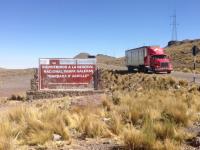
In the 1980s, Bárbara d’Achille traveled through Peru as one of the country’s first environmental writers and activists.
In the 1980s, Bárbara d’Achille traveled through Peru as one of the country’s first environmental writers and activists.
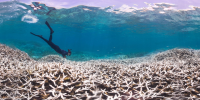
Coral scientists are dealing with an existential crisis and are divided between hope and despair in their approaches to coral conservation.
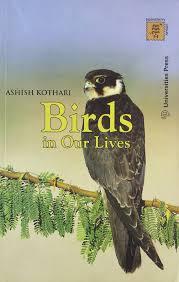
Birds in Our Lives is an account of bird conservation in India, written by conservationist Ashish Kothari. It educates the reader on the importance of birds in Indian culture and economy and highlights the imminent threats to their habitats and populations, as well as growing efforts to conserve birdlife.
Arjaan Pellis, Annemiek Pas, and Martijn Duineveld build upon Niklas Luhmann’s Social Systems Theory to study the multidimensional nature of resource-based conflicts in and around Loisaba conservancy in Kenya.
Paolo Gruppuso explores the genealogy of Edenic narratives about the Pontine Marshes in Agro Pontino, Italy, and the imaginary of the Bonifica Integrale, or integral reclamation.
The authors investigate how land cover, land use, and protected area management affects communities around a forest reserve in the Philippines. They conclude that incorporating local livelihoods into forest conservation strategies results in a measure of sustainability and positively impacts the socioeconomic well-being of communities near the protected area.

Pedro Brancalion is a professor of forest restoration at the University of São Paulo, Brazil. In this presentation, he discusses the results of his research conducted in the Atlantic Forest in Brazil. He applies these results to other tropical forests across the globe, stressing the importance of global restoration implementation.
The authors provide an overview of the scientific and traditional knowledge that the Zaira community, located in the Solomon Islands, uses to underpin their community-based management regime of Leatherback Sea Turtles. This highlights the important role local communities play in the conservation of iconic species.
Based on participant observation, the author offers an ethnographic account of urban middle class Indian tourists’ experience of seeing the tiger in Ranthambore National Park in Rajasthan, and Kanha and Bandhavgarh National Parks in Madhya Pradesh, India.
This study focuses on the social conflict arisen from the use of camera traps for conservation practices and the “human bycatch,” namely captured images of people occurring mostly unintentionally. The authors argue for the necessity of policy guidelines to counter possible repercussion on the use of the camera trap, which is recognized as a resourceful tool for wildlife monitoring and photography.