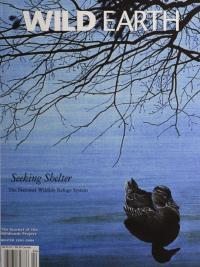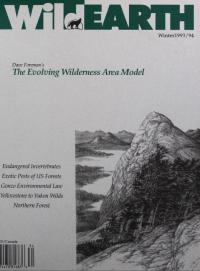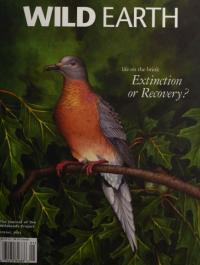
Wild Earth 8, no. 4
Wild Earth 8, no. 4 celebrates a “Wilderness Revival.” The essays present American and Canadian perspectives on wilderness and its values, wilderness politics, and wilderness campaigns both new and old.
Wild Earth 9, no. 2 is dedicated to the topic “Carnivore Ecology and Recovery.” Articles discuss Yellowstone grizzlies, Oregon wolves, and the cultural and biological roles of carnivores.
Wild Earth 9, no. 3 celebrates Aldo Leopold’s legacy. Also in this issue are reports on the Loomis Forest Wildlands, the Southern Rockies and the Grand Canyon ecoregion, and indigenous knowledge and conservation policy in Papua New Guinea.
Wild Earth 9, no. 4 features visionary essays that reimagine the future. Topics include abolitionism and preservationism, the environment and the US constitution, and the Buffalo Commons.
Wild Earth 10, no. 1, presents essays on the mission, vision, and purpose of “The Wildlands Project,” which aims “to design and implement systems of protected natural areas/wildlands networks across the continent.”
Wild Earth 10, no. 3 features essays on “little things”: the microbial microcosm, forgotten pollinators like birds and bats, the American burying beetle, and butterflies.
Wild Earth 10, no. 4 celebrates the journal’s 10-year anniversary with a retrospective of past highlights and many new contributions.
Wild Earth 11, no. 1, features stories about New England’s wilderness: primeval forests, the Northwoods, large mammals, old growth forests, as well as conservation history and biodiversity of the eastern United States.
Wild Earth 11, no. 2, features essays on the Sagebrush Sea, the adventures of migrant pollinators, prevention as the best defense against invasive exotics, wild farming, and fire as a necessary participant in certain ecosystems.
Wild Earth 11, no. 3/4, on defining citizen science: its protagonists, sources, relevance and results, as well as a selection of new and old programs.