

Multimedia | journal article
"Conservation and Individual Worth"
Gill Aitken discusses conservation in relation to individual worth.
Gill Aitken discusses conservation in relation to individual worth.
Marthe Kiley-Worthington discusses integration of wildlife conservation, food production and development in relation to ecological agriculture and elephant conservation in Africa.
Allan Curtis and Terry De Lacey analyze perceptions of the Australian grassroots movement “Landcare” through landholder surveys, thereby discussing wider concepts of natural resource management, stewardship and sustainable agriculture in Australia.
Emily Brady puts forward a model of aesthetic appreciation based on disinterestedness, as an alternative to what she calls the hedonistic model..
Jonah H. Peretti questions nativist trends in Conservation Biology that have made environmentalists biased against alien species.
Holmes Rolston III discusses nature and development in an invited response to other articles in this issue of Environmental Values.

Kay Milton shows that the idea that humans see nature as sacred, and the acknowledgment that humanity is a part of nature rather than separate from it are two concepts that are incompatible in the context of western culture.
Carsten Helm and Udo Simonis develop a proposal for distributing common resources with regard to international climate policy, based on widely accepted equity criteria.
Martin Mulligan explores the Australian conservation movement, arguing that future conservation strategies need to tackle “frontier mentality” and a heavy reliance on scientific rationale. He suggests learning from the Australian Aborigines and non-rational approaches to nature conservation.
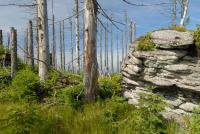
The Bavarian Forest National Park, situated in South-Eastern Germany along the boundary with the Czech Republic, was established as the country’s first national park in October 1970.