How a Catastrophic Flood of the Gürbe River Triggered the Rethinking of Local Flood Protection
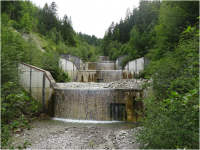
From channelizations to renaturations—the catastrophic flood of the Gürbe River in July 1990 prompted profound changes in approaches to flood protection.
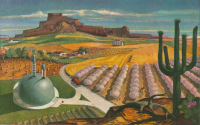
Through an ethnographic account about the use of an electromagnetic water system in the Amish community, Nicole Welk-Joerger explores the conceptual meeting ground between sacred and secular worldviews in efforts that address the Anthropocene.
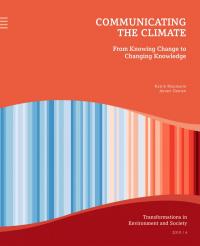
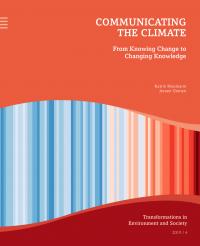
This volume explores the question of whether science should be centered in climate-change communication.
Schur Petri demonstrates how local health workers can effectively communicate climate risks on the ground.
The blooming desert in a 1940s magazine ad showcases the idyllic landscapes and conspicuous absences in atomic bucolic imagery.
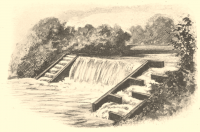
Between 1905 and 1912, experts on fisheries and hydraulic engineering collaborated in order to erect a fishway at the Hemelinger dam.
In this article, Rosi Braidotti explores the relation between posthumanism and the environmental humanities.
This article suggests an alternative understanding of global warming and gives a thermodynamic and historical account of ecological destruction.
The Posthumanities Hub is a network for post-disciplinary and posthuman humanities.
This article looks at climate change adaption and flood mitigation.