


Multimedia | journal article
“Seeing with a Forager’s Eye: A Conversation with Martin Saxer”
Martin Saxer introduces his project “Foraging at the Edge of Capitalism” detailing how his team works and what foraging means to them.
Martin Saxer introduces his project “Foraging at the Edge of Capitalism” detailing how his team works and what foraging means to them.

Excerpt from Wild Mushrooming: A Guide for Foragers by Alison Pouliot and Tom May.
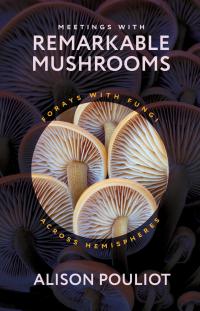
Excerpt from Meetings with Remarkable Mushrooms: Forays with Fungi across Hemispheres by Alison Pouliot.
Jenny Price writes to her nephew Jake, using humor to connect his love of frisbee with everyday environmental responsibility and practical actions.

Ecological Sites of Memory is a RCC project that seeks to look into the historical memories that resonate in our environmental thinking.
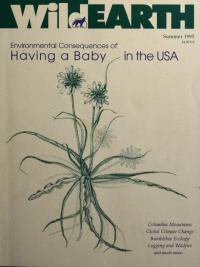
Wild Earth 5, no. 2 discusses the environmental consequences of having a baby in the United States; bumblebee ecology; and the Nevada Biodiversity Research and Conservation Initiative.

In this issue of Earth First! the EF! Ocean Task Force calls for attention to the turtle slaughter in Japan, “Freebird” gives an update on the effort to save Walbran Valley, and the recurring column “Shit fer Brains” (letters from readers) is longer than usual.

Judi Bari’s lecture on Revolutionary Ecology, with two songs at the outset, which illuminates her nature spirituality and biocentrism, her critiques of capitalism as inherently antithetical to environmental sustainability, and her strategic efforts to forge alliances between workers and environmentalists in defense of the redwood biome in Northern California.

Experience Australian environmental activist John Seed’s powerful “Ecological Healing” lecture. Introduced by University of Florida professors Shaya Isenberg & Bron Taylor, Seed, a deep ecology pioneer, calls for reconnecting with our planet, challenging the anthropocentric worldview fueling environmental destruction.

Is technology neutral, or is it the architect of our alienation? In this March 2005 lecture, anarcho-primitivist philosopher John Zerzan argued that civilization itself—defined by domestication, division of labor, and industrial technology—is the root cause of modernity’s ecological and psychological dysfunctions.