


Exhibition chapter
Structures of Inequality | Toxic Relationships
Chapter 3 of the virtual exhibition Toxic Relationships: Uncovering the Worlds of Hazardous Waste.
Chapter 3 of the virtual exhibition Toxic Relationships: Uncovering the Worlds of Hazardous Waste.
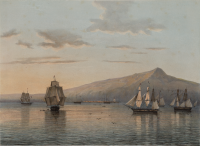
This article examines the environmental implications of Dutch nineteenth-century attempts to establish a telegraph connection across the Sunda Strait.

In this episode from the New Books Network podcast, Alison F. Richard is interviewed on her recent book, Sloth Lemur’s Song: Madagascar from the Deep Past to the Uncertain Present.

In this video, RCC Landhaus Fellow André Felipe Cândido de Silva presents on “The Amazon as a Microcosm of the Anthropocene: Harald Sioli and the Ecological Globalization of the Tropical Rainforest.”
In this episode from the New Books Network podcast, former RCC visiting scholar Thom van Dooren interviewed on his recent book, The Wake of Crows: Living and Dying in Shared Worlds.
In her personal essay “Compressed Cosmopolitanization,” Stefania Gallini’s recounts her feelings of dissonance of joining a reading group focused on risk and Ulrich Beck’s work in safe Munich, while coming from the megalopolis of Bogotá, where risk is a daily reality.
Cheryl Lousley critiques Beck’s abstract vision of global risk and cosmopolitanism for overlooking power dynamics essential to environmental justice.
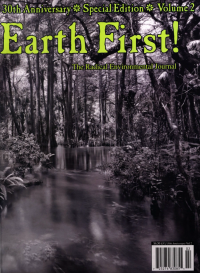
The second volume of the 30th anniversary edition of Earth First! features the topics of industrial agriculture, history and resistance to MTE in Appalachia, direct action for Orangutans in Borneo, and native perspectives on ecology.
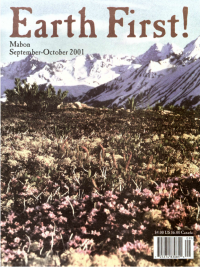
In Earth First! Journal 21, no. 8 Urraca reports from the G8 protests in Genoa, Italy, Dr. Zoidberg discusses the hidden statistics of environmental refugees, Lone Wolf Circles reflects on biocentrism, and a special journal insert presents the defense of the Southern Plains.

In this issue of Earth First! Journal Annie Glade expresses her opinions on the human race in her editorial with the title “Suppression of Truth,” Jonathan Crowell reports from the protests against the Aryan Nations, and Thomas Kocherry discusses globalization and whether it leads to development or destruction.