


Multimedia | film profile
Manufactured Landscapes
This film is a photographic journey showing the effects of human activity on a variety of landscapes.
This film is a photographic journey showing the effects of human activity on a variety of landscapes.
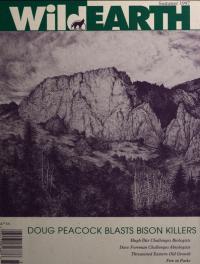
In Wild Earth 7, no. 2 Doug Peacock presents his field report on the Yellowstone bison slaughter, Reed Noss writes about endangered major ecosystems of the United States, and Virginia Abernethy analyzes if and how population growth discourages environmentally sound behavior.
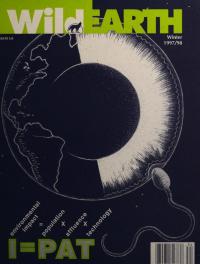
Wild Earth 7, no. 4 features provocative essays on population extinction and the biodiversity crisis, how immigration threatens America’s natural environment, the costs of affluence and consumption, and a technological imperative.
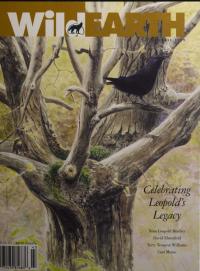
Wild Earth 9, no. 3 celebrates Aldo Leopold’s legacy. Also in this issue are reports on the Loomis Forest Wildlands, the Southern Rockies and the Grand Canyon ecoregion, and indigenous knowledge and conservation policy in Papua New Guinea.
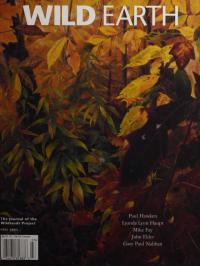
Wild Earth 12, no. 3, features essays on a cultural transformation towards sustainability, commerce and wilderness, the role of literary intellectuals in conservation, and the preservation of wildlands in Mexico.
David Sumner and Peter Gilmour discuss the arguments relating to radiation mortality, arguing them to be rooted in a utilitarian system of moral philosophy.
Mick Smith examines how a posthumanist notion of ecological community might attempt to address questions concerning extinction.
What does the possibility of an early end to human existence as part of a more general biotic extinction mean for the latter day writing of history?
An ethnographic documentary film that follows an aging misfit bachelor as he negotiates his status in a world changed by nature conservation and the loss of traditional farming and forestry in Poland’s Białowieża Forest.
This project looks at the historical intersections between environmental change and migration, and is particularly interested in climate-induced movements of people in the past.