"Vacating the Floodplain: Urban Property, Engineering, and Floods in Brisbane (1974-2011)"
Margaret Cook exposes the dominant socio-economic and political values that shaped flood management between 1974 and 2011 in Brisbane, Queensland, Australia.
This article looks at climate change adaption and flood mitigation.
This paper attempts to demonstrate the nature of human impact on forest cover and flooding in the Annecy Petit Lac Catchment in pre-Alpine Haute Savoie, France, between 1730 and 2000.
Research on climatic variations in the sixteenth century has stressed the exceptionality of extreme events, but the case of the lower Po basin, where lack of instrumental data renders the concept of exceptionality complex and relative, shows that this is not necessarily valid.
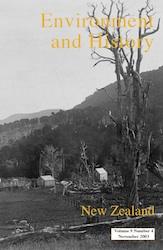
The history of environmental anxiety in nineteenth- and twentieth-century New Zealand can be traced by focusing on problems caused by deforestation.
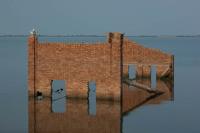
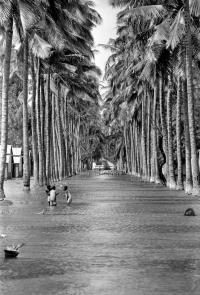
In November 1951 the Polesine, a flatland enclosed by the rivers Po and Adige in northeastern Italy, was hit by massive flooding. Hundreds of hectares were submerged and tens of thousands of people left homeless. The effects of a particularly heavy wet season were compounded by insufficient flood defenses.
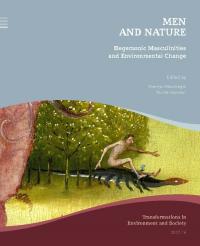
Susanne Leikam explores the extreme weather hero and performed masculinity in contemporary American pop culture through an analysis of the 2013 film Sharknado.
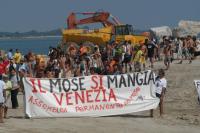
In the early 2000s, a coalition of citizen-activists in Venice denounced the state’s massive flood-barrier project, raising public participation in the fate of the lagoon.
A historically grounded interpretation of Lake Tanganyika’s rising lake waters shows that global warming presents just one of many challenges facing the region.
Novelist Catherine Bush walks the streets of Venice, seeking art that engages with Rachel Carson at the Biennale Arte 2024.