

Multimedia | film profile
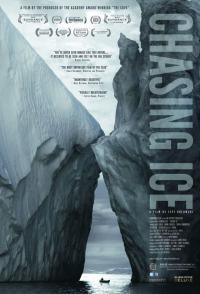
Chasing Ice
This film follows photographer James Balog’s multi-year record of the impacts of climate change on the Arctic.
This film follows photographer James Balog’s multi-year record of the impacts of climate change on the Arctic.

Dagomar Degroot explores the issue of how the changing climate of the Little Ice Age influenced the Dutch Republic during the early modern period.
Whereas scientific evidence points towards substantial and urgent reduction in greenhouses gas (GHG) emissions, economic analysis of climate change seems to be out of sync by indicating a more gradual approach.
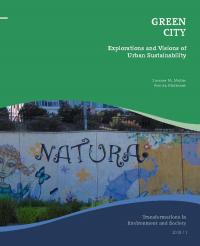
Cindy Sturm looks at differences in climate-related policymaking Münster and Dresden.
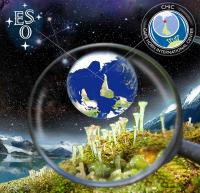
The introduction to the virtual exhibition “From Hand Lenses to Telescopes: Exploring the Microcosm and Macrocosm in Chile’s Biocultural Laboratories.”

In this book Mark Carey identifies glacial retreat as a historical reality that has played a substantial role in the political, economic, and social dramas of South America.
This paper attempts to demonstrate the nature of human impact on forest cover and flooding in the Annecy Petit Lac Catchment in pre-Alpine Haute Savoie, France, between 1730 and 2000.
Since fossil fuel consumption has been integral to the project of modernity, energy history offers one way of trying to understand the Anthropocene and link the histories of capital and climate.
This paper illustrates, through a series of case-studies, how long-term ecological records (>50 years) can provide a test of predictions and assumptions of ecological processes that are directly relevant to management strategies necessary to retain biological diversity in a changing climate.

This animated short film taps into the deep pain of the pandemic, experienced by millions of people all over the world.