Show search results for
Different Ways of Thinking Globally: The Unlikely Return of the Noosphere in Russian Environmental Discourses
What role does Vernadsky’s concept of the noosphere plays in contemporary Russian environmental legislation and green economy discourses?
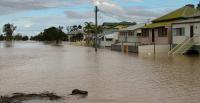
River Rights at Rockhampton (a Rhetoric)
Rivers need property rights so that humans can live with floods.
Milestones of the Anthropocene | Welcome to the Anthropocene
This is a chapter of the virtual exhibition “Welcome to the Anthropocene: The Earth in Our Hands”—written and curated by historian Nina Möllers.
Alistair Knox (1912–1986) and the Birth of Environmental Building in Australia
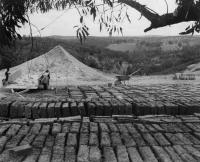
Environmental building in Australia as a form of communing with nature.
Capital Seeds and Hybrid Landscapes: Between Varied Landraces and Monotonous Technological Objects
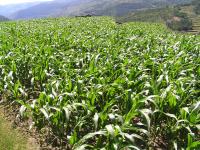
This article discusses the intimate connection between seeds and landscapes through networks of non-corporate farmers, experts, politicians, and agricultural companies.
One Century of Reindeer on South Georgia: From Introduction to Eradication
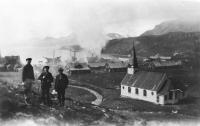
Beginning in 2013, reindeer on South Georgia—originally brought to the island by whalers in 1911—were eradicated in order to safeguard local biodiversity.
The Thames Barrier: London's Moveable Flood Defense
In 1975, construction began for the Thames Barrier, a moveable flood defense located on the River Thames, downstream of central London in the United Kingdom.
Introduction to the Exhibition | Human-Nature Relations in German Literature: A Curated Stroll
This virtual exhibition features, in English translation, short excerpts from German-language literary texts that address human-nature entanglements. The aim is to show how literature can contribute to understanding and problematizing the relation between humans and nonhuman nature. What aspects of human-nature relations are addressed, at what point in literary history, and how are they shaped poetically? For the German-language version of this exhibition, click here.
Berge, Gletscher und Klima | Mensch und Natur in der deutschen Literatur
In this chapter of the German-language version of her virtual exhibition, “Mensch und Natur in der deutschen Literatur (Human-Nature Relations in German Literature),” Sabine Wilke examines mountains and glacial environments in German-language literary descriptions. Whereas the German Romantic poets still highlighted mountainous nature as deeply ambiguous, Goethe’s Faust tried to understand mountainous nature in its materiality through scientific studies. Modernism focuses on the more often destructive results of human-nature entanglements. For the English-language version of this exhibition, click here.