


Multimedia | journal article
"Are There Any Environmental Rights?"
This paper extends the argument in H.L.A. Hart’s “Are there any natural rights?” to argue that there is an environmental moral right against pollution.
This paper extends the argument in H.L.A. Hart’s “Are there any natural rights?” to argue that there is an environmental moral right against pollution.
Garbage, wastewater, and hazardous waste: these are the lenses through which Melosi views nineteenth- and twentieth-century America. In broad overviews and specific case studies, Melosi treats the relationship between industrial expansion and urban growth from an ecological perspective.
This issue of RCC Perspectives offers insights into similarities and differences in the ways people in Asia have tried to master and control the often unpredictable and volatile environments of which they were part

In this article, Antoine Acker provides a different perspective on the Anthropocene.

Shannon Cram explores the slippery subjectivities of nuclear waste and nature at Washington State’s Hanford Nuclear Reservation, examining how this space is framed as both pristine habitat and waste frontier. She examines Hanford’s biological vector control program through the fruit fly and discusses how vector control uses instances of nuclear trespass to articulate the boundary between contaminated and uncontaminated. She concludes that nature is being recruited to do what the U.S. Department of Energy cannot: solve Hanford’s nuclear waste problem.
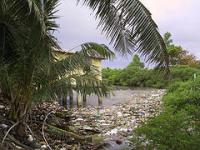
This film focuses on the threat of global warming and rising sea levels in the South Pacific Island State of Tuvalu.
The authors detail their experience of Puchuncavi, the largest, oldest, and most polluting industrial area in Chile. They approach it from a multidisciplinary viewpoint as an experience of the Anthropocene and advocate for an enhanced pedagogy of care born of our inherited pasts and of engagement, interest, and becoming as response-ability.

A collection of essays addressing the collaboration of human and natural forces in the creation of cities, the countryside, and empires.
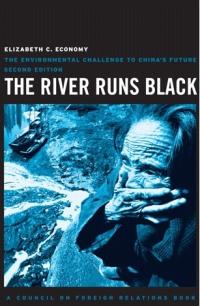
In The River Runs Black, Elizabeth C. Economy examines China’s growing environmental crisis and its implications for the country’s future development.

This is a chapter of the virtual exhibition “Welcome to the Anthropocene: The Earth in Our Hands”—written and curated by historian Nina Möllers.