


Exhibition chapter
Understanding and shaping nature | Welcome to the Anthropocene
This is a chapter of the virtual exhibition “Welcome to the Anthropocene: The Earth in Our Hands”—written and curated by historian Nina Möllers.
This is a chapter of the virtual exhibition “Welcome to the Anthropocene: The Earth in Our Hands”—written and curated by historian Nina Möllers.

Earth First! 27, no. 3 features essays on the topics of animal testing, the Miami Superbowl protests, resistance and repression in Oaxaca, Mexico, nickel mining in Guatemala, and the role and place of sexuality within the environmental movement.

In this chapter from the virtual exhibition “Global Environments: A 360º Visual Journey,” Jesse Peterson’s 360° video presents both an environment and posthuman character from which the human cannot be disentangled, in the context of cultural eutrophication fueled by anthropogenic sources of pollution and climate change affecting the marine environment.

Earth First! 27, no. 5 features topics such as the true bioregional way, New York City’s community gardens, the G8 summit in Heiligendamm, Germany, unsustainable activism, and a safe traveling culture for activists.

Earth First! Journal 22, no. 6 features news from the fight of Colombia’s indigenous U’wa people against Occidental Petroleum (OXY) and Judi Bari’s court success against the FBI; additionally the environmental significance of J.R.R. Tolkiens Lord of the Rings is analyzed, and accounts from an ELF activist are presented.
Acerca de la exposición sección de la exposición virtual de Ricardo Rozzi et al., De lupas a telescopios: Explorando el microcosmos y el macrocosmos en los laboratorios bioculturales de Chile.
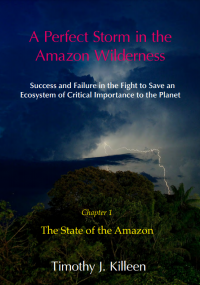
Chapters from Timothy J. Killeen’s book A Perfect Storm in the Amazon Wilderness.
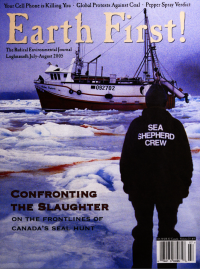
In Earth First! 25, no. 5 Turtle problematizes seal hunt in Canada, Sam and Sprocket refer to the dangers of cellphone communication, and Ron Huber explores the history of Earth First! treehuggers.
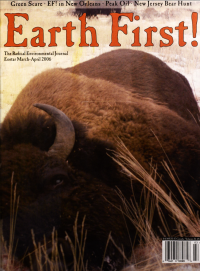
Earth First! 26, no. 3 reports from the buffalo field campaign in Montana, gives an account of the activists’ fight against governmental sanctions and the “criminalization of dissent,” and considers relations between the high cancer rates and the multitude of petrochemical plants in Louisiana.

On November 11, 1886, Heinrich Hertz, the pioneer of high-frequency and radio technology, for the first time observed the propagation of an electromagnetic wave with this setup.