

Arcadia
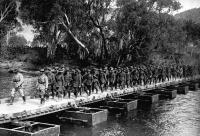
Bombs and Biodiversity: A Case Study of Military Environmentalism in Australia
The history of Puckapunyal Military Training Area illustrates how war and the environment interact in sometimes unexpected ways.
The history of Puckapunyal Military Training Area illustrates how war and the environment interact in sometimes unexpected ways.
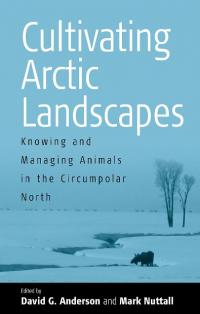
Cultivating Arctic Landscapes gives a well-rounded portrait of wildlife management, aboriginal rights, and politics in the circumpolar north. The book reveals unexpected continuities between socialist and capitalist ecological styles, and addresses the problems facing a new era of cultural exchanges between aboriginal peoples in each region.
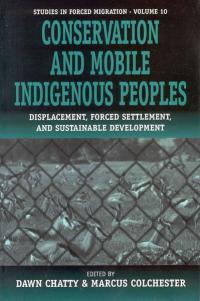
Conservation and Mobile Indigenous Peoples presents case studies on the effects of modern conservation projects on local and indigenous populations across the world, and highlights lessons to be learnt for sustainable development.

This volume explores some of the diverse niches created by humans in different times and places. The essays span the globe, from Texas to China, from Scandinavia to Papua New Guinea, exploring agricultural spaces and indoor biomes, human aesthetics, and Anthropocentric perspectives.
Eriksson and Arnell address the ecological and cultural effects of the Swedish infield system in Scandinavia. Their essay sheds light on how the human construction and management of infields maintained a spatial continuity that greatly altered, and continues to impact, how humans and other organisms have developed.
Martin’s essay examines the influence of the human-built environment on the evolution of other species. Studying these relationships offers us a new way of thinking about human niche construction and the Anthropocene.
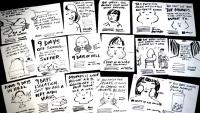
In 2007/2008 a gendered ad campaign was used in Alberta, Canada, to encourage post-secondary students to undergo mumps vaccination. This ad campaign can be seen as the result of a confluence of factors unique to a campus environment.

Pest control was a political act in late-nineteenth-century Hawaiʻi, helping sugarcane planters pursue annexation to the United States.

Aquatic dead zones result from pollution caused by excessive fertilizer runoff and wastewater discharge. Their number and extent are increasing.
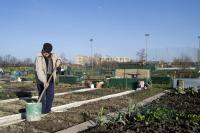
In 1980, Modena was the first city in Italy to introduce a law recognizing social urban allotments.