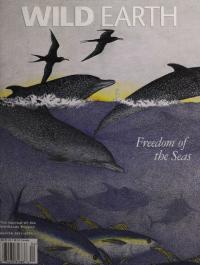
Wild Earth 12, no. 4
Wild Earth 12, no. 4, features an interview with Sylvia Earle on “Our Oceans, Ourselves,” essays on worldwide fishing and consumer conscience, on launching a sea ethic, and the food web complexity in kelp forest ecosystems.

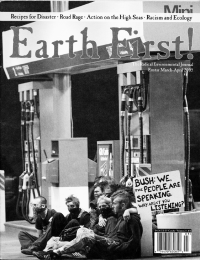
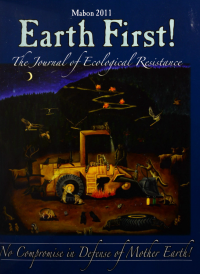
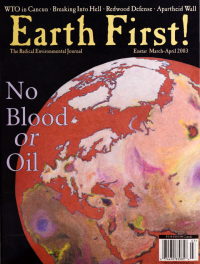
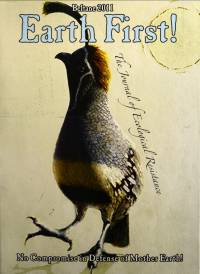
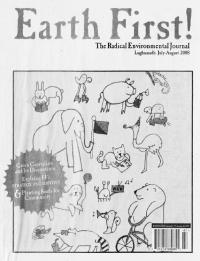
Earth First! 25, no. 6 is devoted to campaigns and activists in Canada, the United States and Palestine who deal with river, mountain and forest conservation, and fight for animal rights and against pollution and apartheid.
Earth First! 25, no. 3 features a call on action for ocean species going extinct, such as the Leatherback turtle, presents the Sea Shepherd Conservation Society’s first mate, and focuses with biotechnology.
Earth First! Journal 31, no. 4 features “An EF!ers Guide to Citizen Monitoring of Water Pollution Discharge Permits,” as well as essays on GPS tracking, border policy, and “Canopy Occupation Against Coal.”
In Earth First! 27, no. 6 activists report on defending wilderness in Iceland, Brazil’s movement of landless workers, the 2007 Wild Earth gathering, monkeywrenching caterpillars, reclaiming land rights in Canada, and new biofuel made out of forest biomass.
Nanotechnology can revolutionize the production of materials and offer ecological solutions but it may have unexpected consequences or lead to mismanagement.
In Earth First! Journal 23, no. 3 Tim Ream reflects on human induced weather changes, Jade gives an update on the struggle against Chevron Texaco in Ecuador, and Samantha and Ryan Simmons analyze the environmental consequences of militarism.
Earth First! Journal 31, no. 3 presents thoughts on jaguar recovery in the United States, ecocide and renewal in Iraq’s marshlands, South Florida forest defense work, and native land rights at Glen Cove.
Earth First! 28, no. 5 looks at topics such as the legacies of race and colonialism, strategies for disrupting the Democratic and Republican National Conventions, and the shortcomings of “green” capitalism.
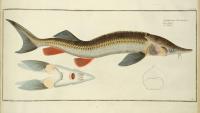
In this chapter of their virtual exhibition “‘Commanding, Sovereign Stream’: The Neva and the Viennese Danube in the History of Imperial Metropolitan Centers,” the authors describe fish resources in St. Petersburg and Vienna and their role in urban life from different perspectives. Fisheries constituted an important part of local economic activities and fishers—both poor professionals and wealthy leisure anglers—were very visible in the cities’ crowds, at their markets, and on the banks of their rivers and canals.