Wild Earth 3, no. 1
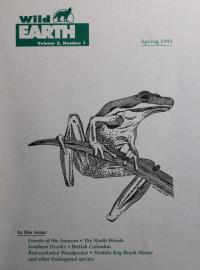
Wild Earth 3, no. 1 on the Northwoods wilderness recovery, the Southern Ozarks, endangered species like the Red-Cockaded Woodpecker and the Perdido Key Beach Mouse, and the breadth and the limits of the deep ecology movement.
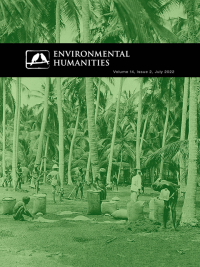
Sophie Chao on “Plantation” in the living lexicon of the journal Environmental Humanities.
This film examines how farmers in Mali are resisting the loss of their land to corporate farming initiatives.
Hagood looks at Rachel Carson’s earlier popular publications on the natural history of the oceans and their impact on Silent Spring (1962).
Allan Curtis and Terry De Lacey analyze perceptions of the Australian grassroots movement “Landcare” through landholder surveys, thereby discussing wider concepts of natural resource management, stewardship and sustainable agriculture in Australia.
Wild Earth 9, no. 4 features visionary essays that reimagine the future. Topics include abolitionism and preservationism, the environment and the US constitution, and the Buffalo Commons.
On his Apollo mission in 1968, astronaut Bill Anders shot one of the most well-known photographs of the Earth—“Earthrise.” It became a symbol for the fragility of the Earth and an icon for the environmental movement that soon followed.
Land conservation initiatives underwent rapid change in early twentieth-century Wisconsin, culminating in the protection of hundreds of local natural areas scattered across the state.