When Waste Disappears, or More Waste Please!
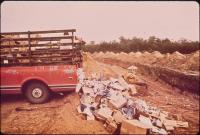
Energy-from-waste plants in places like Britain were designed help reduce waste and carbon emissions, but they have had unintended side-effects.
For the residents of Ozersk, a small town that was the home to Russia’s first plutonium plant, the health effects of radioactivity have been too-little acknowledged by governments that prefer to focus instead on measuring “exposures” and isotope measurements in the surrounding environment.
This volume focuses on environmental knowledge production in the United States by taking as starting points the impact of natural catastrophes and of public debates on climate change and environmental threats.
The premises of water allocation legislation came under harsh scrutiny in the early 2000s as severe drought plagued the American Southwest.
The authors offer a manifesto for the humanities to step up to the challenges of environmental change, and invite others to join the open global consortium Humanities for the Environment.
In case studies ranging from the Early Modern secondhand trade to utopian visions of human-powered vehicles, the contributions gathered here explore the historical fortunes of bicycling and waste recycling—tracing their development over time and providing valuable context for the policy successes and failures of today.
In “The Climate of History: Four Theses,” Dipesh Chakrabarty examined the idea of the Anthropocene—the dawn of a new geological period dominated by human activities—in the context of history and philosophy, raising fundamental questions about how we think historically in an era when human and geological timescales are colliding.This volume of RCC Perspectives offers critiques of these “Four Theses” by scholars of environmental history, political philosophy, religious studies, literary criticism, environmental planning, geography, law, biology, and geology.
Animal rights prevailed over bullfights in a recent judgment of the Supreme Court of India.
LeCain provides a detailed analysis of Chakrabarty’s “Four Theses” and its implications for humanism. This thinking diverges from that of Western Enlightenment by challenging the humanistic belief that we are separate from, even above, the material world. In fact, human culture is inextricably linked to the natural material world; we are both a force and product of it.
This essay examines what the concept of the Anthropocene means for environmental law and policy. Humans can be viewed as both insider and outsider—as an integral part of nature, which we have a duty to protect, and as lord and master of the natural world, taking what we can for our own survival. Eagle explores how the choice of an insider or outsider view can influence political discussions regarding environmental regulation.