

Arcadia
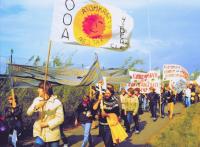
Marching Activists: Transnational Lessons for Danish Anti-Nuclear Protest
Anti-nuclear activism in Denmark was characterized by information campaigns and peaceful marches.
Anti-nuclear activism in Denmark was characterized by information campaigns and peaceful marches.
The Environmental Humanities Lab at the University of Gothenburg (GUEHL) is a cross-disciplinary platform for scholars and scientists interested in humanities perspectives on human-environment interaction.
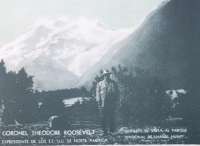
A photograph of Theodore Roosevelt visiting the Nahuel Huapi National Park in Argentina, 1913.

Effective strategies for rat control based on ecology were invented in Baltimore in the 1940s. The program, however, did not last.

An unexpected group of activists, consisting of mostly farmers and vintners, occupied the construction site of a nuclear reactor near the German town of Wyhl in 1975.
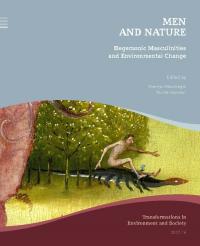
The essays in this collection explore how masculine roles, identities, and practices shape human relationships with the more-than-human world.
Kambe analyzes the masculinist rhetoric of Japanese male writers and intellectuals’ reactions to the 2011 earthquake.
Erik Loomis discusses the production of working-class masculinity in the US Pacific Northwest, highlighting environmental history’s need to reinstate working people in its studies.
Noémi Gonda explores how the masculine figure of the cattle rancher plays a part in local explorations of climate change adaptation in Nicaragua.
Jody Chan and Joe Curnow analyze the different gender and race dynamics in the student climate movement, asking why White men’s participation is constructed as being more valuable.