

Multimedia | image
Photograph of Rachel Carson testifying before Congress, 1963
Rachel Carson testifying before the Senate Government Operations subcommitte.
Rachel Carson testifying before the Senate Government Operations subcommitte.
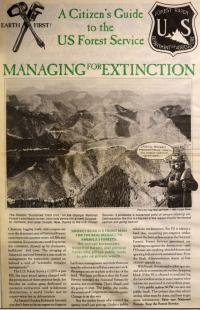
This Earth First! tabloid describes negative impacts of the U.S. Forest Service on national forests. Topics include reform proposals for the USFS, the role of deep ecology, the destruction of eco-systems across the U.S., abuse of Native American cultural heritage, and a call for the protection of national forests.

Beschädigte Vegetation und sterbender Wald traces the history of the environmental problem of air pollution and its damaging effects on forests in Germany.

Schlangenlinien examines the history of the European Viper and the shift from extermination policies to those of protection and rehabilitation in the nineteenth and twentieth centuries.

Natur und Industrie im Sozialismus challenges common conceptions that portray the environmental history of East Germany as one of decline, highlighting the existence of advocates of environmental measures within the socialist party.

Wasser correlates the control of water supply with power in a comparative collection of articles on water in ancient, early modern, and modern states.

This undated [1990?] issue of Earth First! outlines the motivations and philosophy of the Earth First! movement. It includes a “Direct action 101” primer by Ed Abbey and a guide for forming Earth First! groups.

Using the example of the Stirling Range National Park, Andrea Gaynor shows that the dualistic practice of reservation does not necessarily ensure the preservation or conservation of landscapes and ecosystems.
Tom Griffiths argues for the importance of environmental history, and gives us three reasons for the uniqueness of the environmental history of Australia.

Gay Hawkins puts the ethical significance of waste in everyday life into historical, social, and cultural perspective, seeking to change ecologically destructive practices without recourse to guilt, moralism, or despair.