Wild Earth 1, no. 1
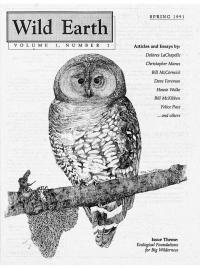
Wild Earth 1, no. 1, with the theme “Ecological Foundations for Big Wilderness,” discusses ecosystem restoration in Florida, corridors in the Klamath Mountains, and a Yellowstone ecosystem Marshall Plan.
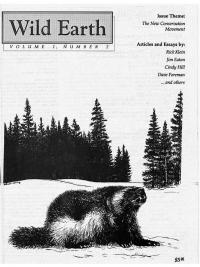
Wild Earth 1, no. 2, with the issue theme “The New Conservation Movement,” on reforming the Sierra Club, grizzly hunting in Montana, and an Ancient Forest Reserve proposal for the Mendocino National Forest.
Wild Earth 1, no. 3 with essays on hydro development in North America, trans-boundary ecosystem preservation, the central Appalachian wilderness, and the need for deep ecological language.
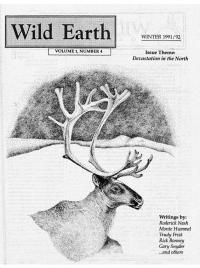
Wild Earth 1, no. 4. on Canadian wilderness laws and national parks, how a proposed copper mine in Canada is threatening the rivers Tatshenshini and Alsek, and the hidden costs of developing natural gas reserves.
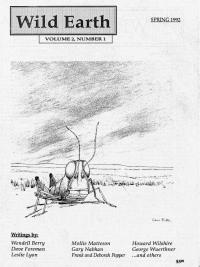
Wild Earth 2, no. 1 with essays on the ecological costs of livestock, bison hunt, trouts and their habitat, “wheeled locusts,” and off-road-vehicle trails on public lands.
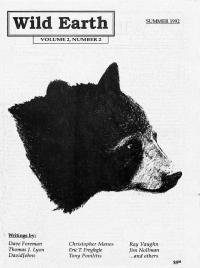
Wild Earth 2, no. 2., with an update on the Wildlands Project and essays on: forest health and forestry, the practical relevance of deep ecology, and ancient forest legislation.
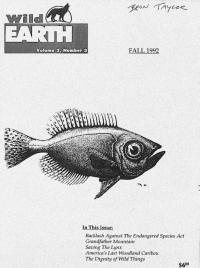
Wild Earth 2, no. 3 about the Endangered Species Act, saving the Lynx, bioregionalism, and America’s last woodland caribou.
In this issue of Earth First! Journal John Green brings news from Alaska regarding the suspension of killing wolves. In addition, Carolyn Moran, the editor of magazine Talking Leaves, discusses tree-free paper and waste, and Judi Bari reveals the secret history of tree spiking.
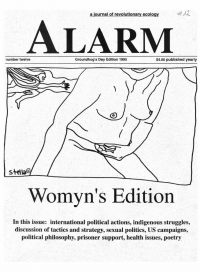
This issue of the ALARM is produced by women only. It is dedicated to the struggle to smash down patriarchy and save the planet, expresses solidarity with activists struggling against capitalist-patriarchal devastation as womyn, and “affirms our existence and our power on the front lines of the resistance.” Aimee Mostwill discusses pregnancy, abortion, and overpopulation; Judi Bari explains “why I am not a misanthrope.”
Live Wild or Die! no. 7 declares its attempt to be “unity” issue, crossing the boundaries that separate different movements. The issue covers fascism, work as wage-slavery, green anarchy, the millennium bug, and sexual liberation.