


Multimedia | journal
Wild Earth 1, no. 3
Wild Earth 1, no. 3 with essays on hydro development in North America, trans-boundary ecosystem preservation, the central Appalachian wilderness, and the need for deep ecological language.
Wild Earth 1, no. 3 with essays on hydro development in North America, trans-boundary ecosystem preservation, the central Appalachian wilderness, and the need for deep ecological language.
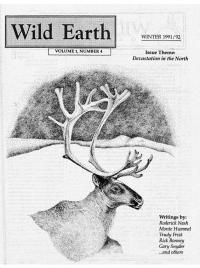
Wild Earth 1, no. 4. on Canadian wilderness laws and national parks, how a proposed copper mine in Canada is threatening the rivers Tatshenshini and Alsek, and the hidden costs of developing natural gas reserves.
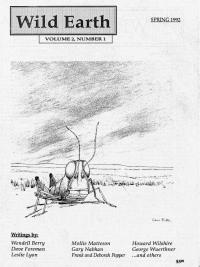
Wild Earth 2, no. 1 with essays on the ecological costs of livestock, bison hunt, trouts and their habitat, “wheeled locusts,” and off-road-vehicle trails on public lands.
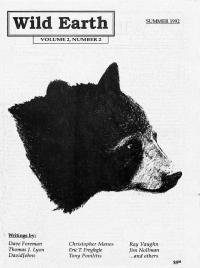
Wild Earth 2, no. 2., with an update on the Wildlands Project and essays on: forest health and forestry, the practical relevance of deep ecology, and ancient forest legislation.
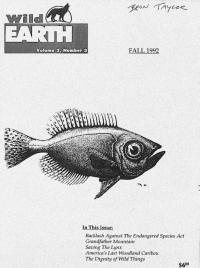
Wild Earth 2, no. 3 about the Endangered Species Act, saving the Lynx, bioregionalism, and America’s last woodland caribou.
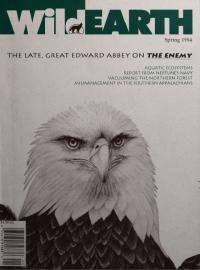
Wild Earth 4, no. 1 discusses aquatic ecosystems, vacuuming the Northern Forest, mismanagement in the Southern Appalachians, and lessons from the Vermont wilderness.
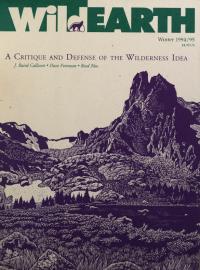
This issue of Wild Earth celebrates the third year of the Wildlands Project featuring the theme “A Critique and Defense of the Wilderness Idea,” as well as essays on: falcons in urban environments, state complicity in wildlife losses, and common lands recovery.
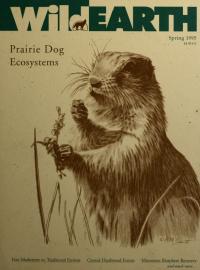
Wild Earth 5, no. 1 focuses on prairie dog ecosystems and includes a Minnesota biosphere recovery strategy.

Wild Earth 6, no. 2 features Bill McKibben on nature writing and common ground, Laura Westra writes about ecosystem integrity, sustainability, and the “Fish Wars”, and W. O. Pruitt explains “The Caribou Commons.”
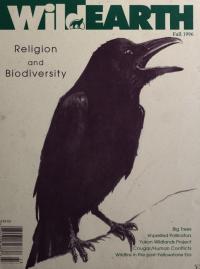
In Wild Earth 6, no. 3 Max Oelschlaeger discusses religion and the conservation of biodiversity, Christopher Genovali reflects on the Alberta oil rush, Joseph P. Dudley writes about biodiversity in Southern Africa, and A. Kent MacDougall considers thinking of humans as a cancer.