

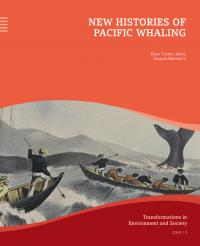
Perspectives Article
What is a Whale? Cetacean Value at the Bering Strait, 1848–1900
Bathsheba Demuth looks at the value of whales for indigenous peoples around the Bering Strait.
Bathsheba Demuth looks at the value of whales for indigenous peoples around the Bering Strait.
Ryan Tucker Jones recounts how environmental activist organizations came into conflict with indigenous groups in the Bering Straight.
Adam Paterson and Chris Wilson consider Ngarrindjeri contributions to Southern Australia’s nineteenth-century whaling industry.
Jonathan Clapperton details the importance of whaling to Puget Sound Coast Salish people (Puget Salish) along the Pacific Northwest Coast.
Billie Lythberg and Wayne Ngata explore what it means to be whale people in the modern whaling period.
Joshua L. Reid concludes that the history of Pacific whaling has undergone a scholarly renaissance.
Håvald Hansen of Fanasgieddi in Tana emphasizes that sustaining Sami fishing traditions, local control, and respect for salmon are essential to protecting cultural identity and livelihoods despite legal and environmental challenges.
Marine Harvest communications director Jørgen Christiansen highlights the company’s shift from conflict to collaboration with First Nations, emphasizing transparency, environmental responsibility, and ongoing dialogue to balance aquaculture operations with community and ecological concerns.
Carmel Finley reflects on her developing interest in fish and fisheries, particularly in postwar fisheries science.
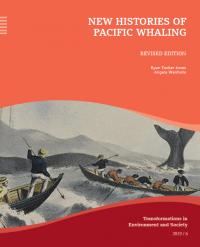
This volume provides new histories of Pacific whaling from untold perspectives.