Rachel Carson Scholarship—Where Next?
Maril Hazlett calls for a more critical and nuanced reassessment of Rachel Carson’s Silent Spring, examining both its impact and its limitations in reaching diverse sectors of society.
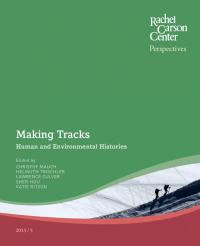
This issue of RCC Perspectives takes a sweeping look at encounters with and legacies of the book, examining the global impact of Silent Spring over its half century of existence and considering the ways in which Rachel Carson’s ecological worldview equips us to understand and confront current and future challenges to our planet.
Jenny Price critiques Rachel Carson’s Silent Spring for reinforcing a human–nature divide that shifted environmental responsibility onto individuals while obscuring systemic and institutional accountability.
Lawrence Culver argues that no book has matched the impact of Rachel Carson’s Silent Spring and urges modern environmentalists to emulate her clear, compelling communication to reach broad audiences.
Lisa Sideris uses the unusually warm 2012 spring in Bloomington to highlight public complacency toward climate change, echoing themes from Silent Spring.
Nancy Langston reinterprets Rachel Carson’s Silent Spring to argue that ecological and human health are inseparable, urging renewed responsibility toward chemical safety and environmental stewardship.
Akrish Adhikari argues that Rachel Carson’s Silent Spring sparked a lasting global environmental movement, continuing to inspire organizations like the World Wide Fund for Nature (WWF) and shape modern ecological advocacy.