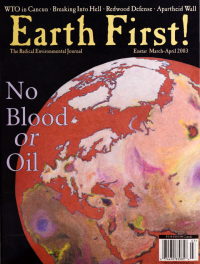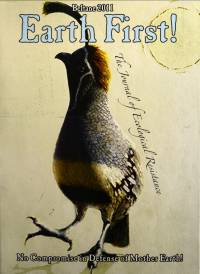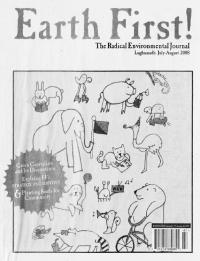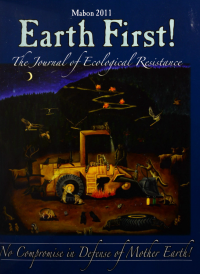
Earth First! Journal 31, no. 4
Earth First! Journal 31, no. 4 features “An EF!ers Guide to Citizen Monitoring of Water Pollution Discharge Permits,” as well as essays on GPS tracking, border policy, and “Canopy Occupation Against Coal.”
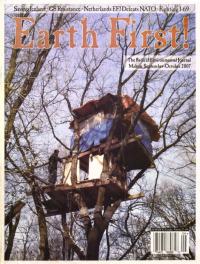
In Earth First! 27, no. 6 activists report on defending wilderness in Iceland, Brazil’s movement of landless workers, the 2007 Wild Earth gathering, monkeywrenching caterpillars, reclaiming land rights in Canada, and new biofuel made out of forest biomass.
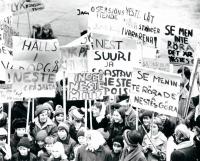
This article studies the “Neste war,” 1970–1972, the first major victory of the environmental movement in Finland.
In Earth First! Journal 23, no. 3 Tim Ream reflects on human induced weather changes, Jade gives an update on the struggle against Chevron Texaco in Ecuador, and Samantha and Ryan Simmons analyze the environmental consequences of militarism.
Earth First! Journal 31, no. 3 presents thoughts on jaguar recovery in the United States, ecocide and renewal in Iraq’s marshlands, South Florida forest defense work, and native land rights at Glen Cove.
Earth First! 28, no. 5 looks at topics such as the legacies of race and colonialism, strategies for disrupting the Democratic and Republican National Conventions, and the shortcomings of “green” capitalism.
This is Chapter 5 of the exhibition “Rachel Carson’s Silent Spring: A book that changed the world” by historian Mark Stoll.
This is Chapter 8 of the exhibition “Rachel Carson’s Silent Spring: A book that changed the world” by historian Mark Stoll.
Since the 1960s, the community food movement in the United Kingdom has evolved from a means of survival to an alternative to industrialized agriculture.
A chapter of the virtual exhibition “Beyond Doom and Gloom: An Exploration through Letters,” this letter presents the aquarium as a source of optimism. The exhibition is curated by environmental educator Elin Kelsey.