You've been Trumped
In this David and Goliath story for the 21st century, a group of proud Scottish homeowners take on celebrity tycoon Donald Trump as he buys up one of Scotland’s last wilderness areas to build a golf resort.
The authors offer a manifesto for the humanities to step up to the challenges of environmental change, and invite others to join the open global consortium Humanities for the Environment.
This documentary from filmmaker and investigative journalist Anthony Baxter examines the eco-impact of luxury golf resorts around the world.
In the early 1920s one of the first European national parks was established in a densely populated area to foster both nature protection and economic growth.
Animal rights prevailed over bullfights in a recent judgment of the Supreme Court of India.
Meyer explores the need for a comprehensive politics of climate change.
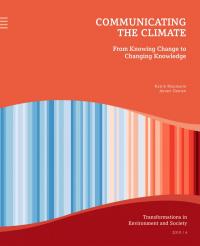
The 2015 edition examines what we think we know about environmental damage and the hidden threats to sustainability we need to recognize.
Is a world without waste truly achievable? The essays in this volume of RCC Perspectives discuss zero waste as a vision, as a historical concept, and as an international practice. Going beyond the motto of “reduce, reuse, recycle,” they reflect on the feasibility of creating closed material cycles and explore real-world examples of challenges and successes on the way to zero waste.
Society’s approach to environmental protection has so far relied on certain prevailing, but perhaps specious, beliefs—that we cannot impact the environment positively, or that environmental protection is incompatible with economic growth. Braungart explores how, rather than making ineffective changes to an already broken system, it would be more beneficial to rethink that system entirely.
This paper looks at the history of attempts to influence the conservation and management of the world’s forests through the creation of international organisations since the 1890s. The attempts are seen in the context of changes in the world political economy, changes to the forests themselves, and changing ideas about how forests should be conserved and managed.