Wild Earth 13, no. 4
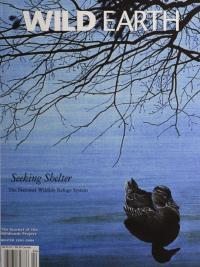
Wild Earth 13, no. 4, focuses on the National Wildlife Refuge System with essays on its history, the wildlife refuge in Southeastern Oregon, wildlands ofthe Great Plains, and pronghorn extinction in the Sonoran Desert.
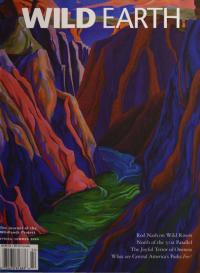
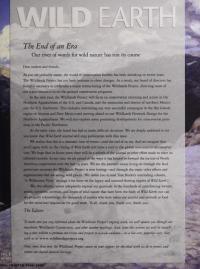
Wild Earth 14, no. 1/2 features essays on protecting the national forest wilderness after the Wilderness Act, natural history going extinct, carnivore conservation in the Rocky Mountains, and questions of fertility.
Wild Earth 14, no. 3/4, is the last issue of the Wild Earth Journal. It presents essays on connectivity and long-distance migration in human-fragmented landscapes, the Great Bear Rainforest archipelago, and rewilding Patagonia.
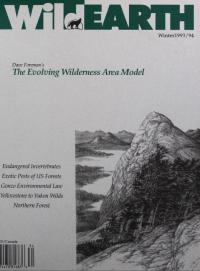
Wild Earth 3, no. 4 puts the spotlight on endangered invertebrates, exotic pests in US forests, the Northern Rockies Ecosystem Protection Act, and keywords of conservation and environmental discourses.
In this issue of Earth First! Journal John Green brings news from Alaska regarding the suspension of killing wolves. In addition, Carolyn Moran, the editor of magazine Talking Leaves, discusses tree-free paper and waste, and Judi Bari reveals the secret history of tree spiking.
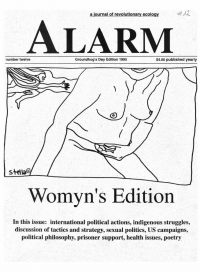
This issue of the ALARM is produced by women only. It is dedicated to the struggle to smash down patriarchy and save the planet, expresses solidarity with activists struggling against capitalist-patriarchal devastation as womyn, and “affirms our existence and our power on the front lines of the resistance.” Aimee Mostwill discusses pregnancy, abortion, and overpopulation; Judi Bari explains “why I am not a misanthrope.”
Live Wild or Die! no. 7 declares its attempt to be “unity” issue, crossing the boundaries that separate different movements. The issue covers fascism, work as wage-slavery, green anarchy, the millennium bug, and sexual liberation.
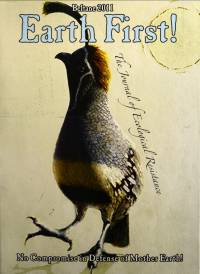
Earth First! Journal 31, no. 3 presents thoughts on jaguar recovery in the United States, ecocide and renewal in Iraq’s marshlands, South Florida forest defense work, and native land rights at Glen Cove.
Live Wild or Die! no. 6 includes discussions of civil disobedience and demonstration tactics, rage against television, and an explanation of the negative environmental and health consequences of tampon use. In an introductory editorial, the editors clarify their non-violent intent.
Live Wild or Die! no. 8 shows the progressively radical vision of the magazine and the increasingly large chasm separating it from the mainstream of Earth First! It features musings about industrial society collapse, essays by John Zerzan and Ted Kaczynski, and reports on ELF actions and GMOs.