


Multimedia | book profile
The Green and the Brown: A History of Conservation in Nazi Germany
Tthe first comprehensive discussion of conservation in Nazi Germany.
Tthe first comprehensive discussion of conservation in Nazi Germany.

Christopher Bosso considers how organizations that once contested the Establishment have become an establishment of their own.
Alex Lockwood tries to measure the importance of Rachel Carson’s work in its affective influence on contemporary environmental writing across the humanities.
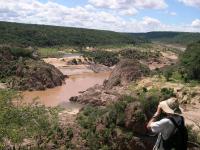
Striving to create a “South African Eden,” the Kruger National Park was established in 1926 under the leadership of warden James Stevenson-Hamilton. Since this time, the park has developed into one the greatest and most renowned game reserves in the world.
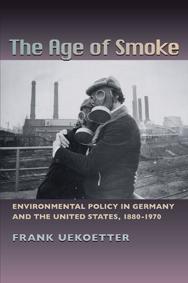
A comparative history of environmental policy development in Germany and the United States from 1880 to 1970, and the rise of civic activism to combat air pollution.
Should environmental philosophers—or practical conservationists—focus their attentions on particular living creatures, or on the community of which they, and we, are part?
Michael Everett examines how environmental movements develop and how they deal with economic counterforces and motivate political actors to pass effective environmental regulations.
This book offers a history of the conservation movement’s origins and provides a context for understanding contemporary enviromental problems and possible solutions.
A collection of essays examining the tortured environmental history of Pittsburgh, a region blessed with an abundance of natural resources as well as a history of intensive industrial development.

On 8 November 1935, Mexico’s president, Lázaro Cárdenas (1934–1940), established the Iztaccíhuatl and Popocatépetl National Park, the first of nearly forty national parks he would create within the next few years. By 1940, Mexico had more parks than any other country in the world.