


Arcadia
Animal Rights vs. Bullfights: The Horns of an Indian Dilemma
Animal rights prevailed over bullfights in a recent judgment of the Supreme Court of India.
Animal rights prevailed over bullfights in a recent judgment of the Supreme Court of India.
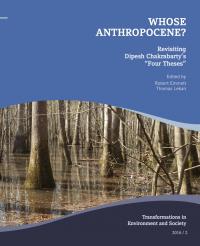
Meyer explores the need for a comprehensive politics of climate change.
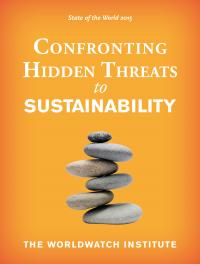
The 2015 edition examines what we think we know about environmental damage and the hidden threats to sustainability we need to recognize.
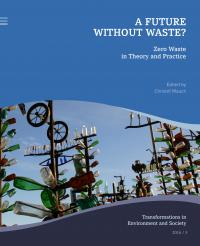
Is a world without waste truly achievable? The essays in this volume of RCC Perspectives discuss zero waste as a vision, as a historical concept, and as an international practice. Going beyond the motto of “reduce, reuse, recycle,” they reflect on the feasibility of creating closed material cycles and explore real-world examples of challenges and successes on the way to zero waste.
This paper looks at the history of attempts to influence the conservation and management of the world’s forests through the creation of international organisations since the 1890s. The attempts are seen in the context of changes in the world political economy, changes to the forests themselves, and changing ideas about how forests should be conserved and managed.

Kamikōchi is the southern gateway to the Japan Alps, which in 1934 was one of the first areas in Japan to be designated a national park. This was the result of a rapid rise to prominence that followed a 1927 newspaper poll of Japanese landscapes.
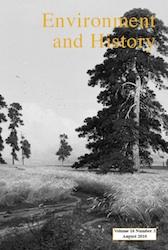
This paper explores the social and political factors that historically limited the national nature conservation movement’s influence in Japan, and outlines recent developments which may lead to both a greater emphasis on the greater participation of non-governmental organisations in the political process, and a greater emphasis on the protection of the natural environment.

Live Wild or Die! no. 8 shows the progressively radical vision of the magazine and the increasingly large chasm separating it from the mainstream of Earth First! It features musings about industrial society collapse, essays by John Zerzan and Ted Kaczynski, and reports on ELF actions and GMOs.
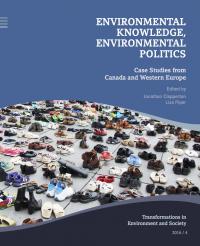
These essays showcase examples from Canada and Western Europe, offering insights into how different forms of environmental knowledge and environmental politics come to be seen as legitimate or illegitimate.
This article traces the development of environmentalism in Portugal, and particularly the role of environmental NGOs as producers of expert knowledge to be used in policy making. The Portuguese environmental movement has professionalized rather than formalizing as green political parties. Portuguese environmentalism has adapted and evolved under authoritarian regimes, neoliberalism, European integration, and the financial crisis.