Episode 5: "The Storm History of Stanley Park"
Wolf Read, a 2009 graduate student in the Department of Forest Sciences at UBC, talks about his research on the complicated nature of windstorms in British Columbia’s Lower Mainland.
Avner De-Shalit discusses how the neglect of environmental philosophy in historical discourse of the environmental movement mistakenly identify “political ecology” with right-wing ideologies.
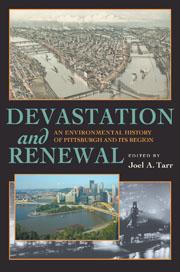
A collection of essays examining the tortured environmental history of Pittsburgh, a region blessed with an abundance of natural resources as well as a history of intensive industrial development.
Nalini Nadkarni explores the rich, vital world found in the tops of trees and communicates what she finds to non-scientists.
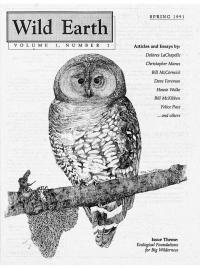
Wild Earth 1, no. 1, with the theme “Ecological Foundations for Big Wilderness,” discusses ecosystem restoration in Florida, corridors in the Klamath Mountains, and a Yellowstone ecosystem Marshall Plan.
In this essay (updated in 2019), Bron Taylor offers background about the events that gave rise to the Earth First! movement and reviews some of the watershed moments in its history, including its print publications.
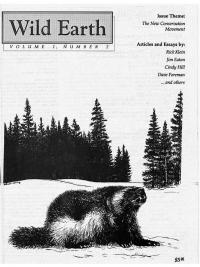
Wild Earth 1, no. 2, with the issue theme “The New Conservation Movement,” on reforming the Sierra Club, grizzly hunting in Montana, and an Ancient Forest Reserve proposal for the Mendocino National Forest.
Wild Earth 1, no. 3 with essays on hydro development in North America, trans-boundary ecosystem preservation, the central Appalachian wilderness, and the need for deep ecological language.
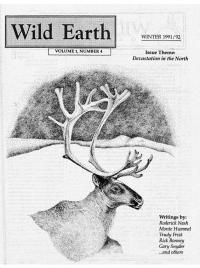
Wild Earth 1, no. 4. on Canadian wilderness laws and national parks, how a proposed copper mine in Canada is threatening the rivers Tatshenshini and Alsek, and the hidden costs of developing natural gas reserves.
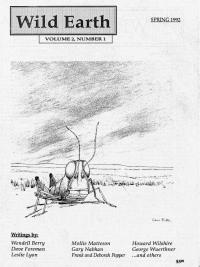
Wild Earth 2, no. 1 with essays on the ecological costs of livestock, bison hunt, trouts and their habitat, “wheeled locusts,” and off-road-vehicle trails on public lands.